
Saudi Arabia
Context of Saudi Arabia
Saudi Arabia, officially the Kingdom of Saudi Arabia (KSA), is a country in West Asia. Located in the centre of the Middle East, it covers the bulk of the Arabian Peninsula and has a land area of about 2,150,000 km2 (830,000 sq mi), making it the fifth-largest country in Asia, the largest in the Middle East, and the 12th-largest in the world. It is bordered by the Red Sea to the west; Jordan, Iraq, and Kuwait to the north; the Persian Gulf, Bahrain, Qatar and the United Arab Emirates to the east; Oman to the southeast; and Yemen to the south. The Gulf of Aqaba in the northwest separates Saudi Arabia from Egypt and Israel. Saudi Arabia is the only country with a coastline along both the Red Sea and the Persian Gulf, and most of its terrain consists of arid desert, lowland, steppe, and mountains. The capital and largest city is Riyadh; other major cities include Jeddah and the two holiest cities in Islam, Mecca and Medin...Read more
Saudi Arabia, officially the Kingdom of Saudi Arabia (KSA), is a country in West Asia. Located in the centre of the Middle East, it covers the bulk of the Arabian Peninsula and has a land area of about 2,150,000 km2 (830,000 sq mi), making it the fifth-largest country in Asia, the largest in the Middle East, and the 12th-largest in the world. It is bordered by the Red Sea to the west; Jordan, Iraq, and Kuwait to the north; the Persian Gulf, Bahrain, Qatar and the United Arab Emirates to the east; Oman to the southeast; and Yemen to the south. The Gulf of Aqaba in the northwest separates Saudi Arabia from Egypt and Israel. Saudi Arabia is the only country with a coastline along both the Red Sea and the Persian Gulf, and most of its terrain consists of arid desert, lowland, steppe, and mountains. The capital and largest city is Riyadh; other major cities include Jeddah and the two holiest cities in Islam, Mecca and Medina. With a population of almost 32.2 million, Saudi Arabia is the fourth most populous country in the Arab world.
Pre-Islamic Arabia, the territory that constitutes modern-day Saudi Arabia, was the site of several ancient cultures and civilizations; the prehistory of Saudi Arabia shows some of the earliest traces of human activity outside Africa. Islam, the world's second-largest religion, emerged in what is now Saudi Arabia in the early seventh century. Islamic prophet Muhammad united the population of the Arabian Peninsula and created a single Islamic religious polity. Following his death in 632, his followers expanded Muslim rule beyond Arabia, conquering territories in North Africa, Central, South Asia and Iberia within decades. Arab dynasties originating from modern-day Saudi Arabia founded the Rashidun (632–661), Umayyad (661–750), Abbasid (750–1517), and Fatimid (909–1171) caliphates, as well as numerous other dynasties in Asia, Africa, and Europe.
Saudi Arabia was founded in 1932 by King Abdulaziz (also known as Ibn Saud), who united the regions of Hejaz, Najd, parts of Eastern Arabia (Al-Ahsa) and South Arabia (Aseer) into a single state through a series of conquests, beginning in 1902 with the capture of Riyadh. Saudi Arabia has since been an absolute monarchy governed by an authoritarian regime without public input. In its Basic Law, Saudi Arabia defines itself as a sovereign Arab Islamic state with Islam as its official religion and Arabic as its official language. The ultraconservative Wahhabi religious movement within Sunni Islam was the prevailing political and cultural force in the country until the 2000s. The Saudi government has attracted criticism for various policies such as its intervention in the Yemeni Civil War and widespread use of capital punishment.
Saudi Arabia is considered both a regional and middle power. Since petroleum was discovered in the country in 1938, the kingdom has become the world's second-largest oil producer and leading oil exporter, controlling the world's second-largest oil reserves and the sixth-largest gas reserves. Saudi Arabia is categorized as a World Bank high-income economy and is the only Arab country among the G20 major economies. The Saudi economy is the largest in the Middle East and the world's nineteenth largest by nominal GDP and seventeenth largest by PPP. Ranking very high in the Human Development Index, Saudi Arabia offers free university tuition, no personal income tax, and free universal health care. With its dependency on foreign labour, Saudi Arabia has the world's third-largest immigrant population. Saudi Arabians are among the world's youngest people, with approximately half being under 25 years old. Saudi Arabia is a member of the Gulf Cooperation Council, United Nations, Organisation of Islamic Cooperation, Arab League, and OPEC, as well as a dialogue partner of the Shanghai Cooperation Organisation.
More about Saudi Arabia
- Currency Saudi riyal
- Calling code +966
- Internet domain .sa
- Mains voltage 230V/60Hz
- Democracy index 2.08
- Population 791105
- Area 2250000
- Driving side right
- Stay safe
 WARNING: Do not in any way criticize or show any kind of disrespect to Islam, the Saudi royal family, the Saudi government, or the country in general. Simply avoid these topics if you can.
Saudi Arabia is notorious for its extremely harsh punishments ranging from a lifetime of imprisonent and mistreatment to the death penalty. Offences that would normally be considered minor in other parts of the world (such as apostasy and adultery) are punishable by death. As long as you obey the law and respect local customs, your visit will be hassle free.
Saudi Arabia has one of the lowest crime rates in the world, owing to a notoriously harsh justice system. The system gives no leeway to non-Saudis, and embassies can provide only limited help in these situations. Saudi Arabia is considered by many to have one of the worst human rights records in the world. You need to watch what you say and do, always. As the saying goes, "If you have nothing good to say, don't say anything at all."
...Read moreStay safeRead less
WARNING: Do not in any way criticize or show any kind of disrespect to Islam, the Saudi royal family, the Saudi government, or the country in general. Simply avoid these topics if you can.
Saudi Arabia is notorious for its extremely harsh punishments ranging from a lifetime of imprisonent and mistreatment to the death penalty. Offences that would normally be considered minor in other parts of the world (such as apostasy and adultery) are punishable by death. As long as you obey the law and respect local customs, your visit will be hassle free.
Saudi Arabia has one of the lowest crime rates in the world, owing to a notoriously harsh justice system. The system gives no leeway to non-Saudis, and embassies can provide only limited help in these situations. Saudi Arabia is considered by many to have one of the worst human rights records in the world. You need to watch what you say and do, always. As the saying goes, "If you have nothing good to say, don't say anything at all."
DrivingThe biggest danger a visitor to Saudi Arabia faces is dangerous driving. Drivers typically tend to attack their art with an equal mix of aggressiveness and incompetence.
Illict drugsSaudi Arabia punishes drug offences severely. Drug trafficking and the consumption of narcotics will lead to a death sentence. Your entry card will mention this clearly as well.
Women travellersSaudi society endeavours to keep men and women separate, but sexual harassment — leers, jeers and even being followed — is depressingly common. Raising a ruckus or simply loudly asking the harasser anta Muslim? ("are you Muslim?") will usually suffice to scare them off.
Women should keep in mind that under Saudi law, four independent male witnesses are required to testify in order for someone to be convicted of rape. Failure to produce the four male witnesses will result in the woman being found guilty of pre-marital sex or adultery (which are crimes under Saudi law) instead.
If you are married to a Saudi national, you are subject to Saudi marital laws and the mahram system.
You and your children (if you have any) cannot leave the country or do just about anything (i.e. perform the Hajj, open a bank account, etc.) unless your husband or guardian approves. This system of guardianship can make it impossible for you, as a grown adult, to exercise full control over your own life. In the unfortunate event that your Saudi spouse dies, someone else ends up becoming your mahram. This could be your son, a sibling, and so on. If you divorce a Saudi national, it is next-to impossible to leave the country with any children that were born during the marriage, even if you've been granted custody of them. Saudi courts rarely grant this privilege unless there's a compelling reason to do so. Divorces that have taken place in other countries are not recognised by Saudi Arabia. If your children visit your (former) husband from abroad, they will not be allowed to leave unless he approves. If you had the misfortune of being married to an abusive spouse and are not prepared to deal with the prospect of never seeing your children again, encourage them to not go in the first place.LGBT travellersThe legal and cultural abhorrence against the LGBT community is far-reaching in Saudi Arabia. LGBT activities are illegal in Saudi Arabia, and they are punishable by death. If you fit in this category, it would be better to not visit Saudi Arabia at all.
Safety concernsA low-level insurgency which targets foreigners in general and Westerners in particular continues to simmer. The wave of violence in 2003-2004 has been squashed by a brutal crackdown by Saudi security forces and there have been no major attacks in the cities for several years, security remains tight and it is prudent not to draw too much attention to yourself. Foreigners should register their presence with their embassy or consulate. Emergency alert systems using e-mail and cell phone messages are maintained by many governments for their guest workers.
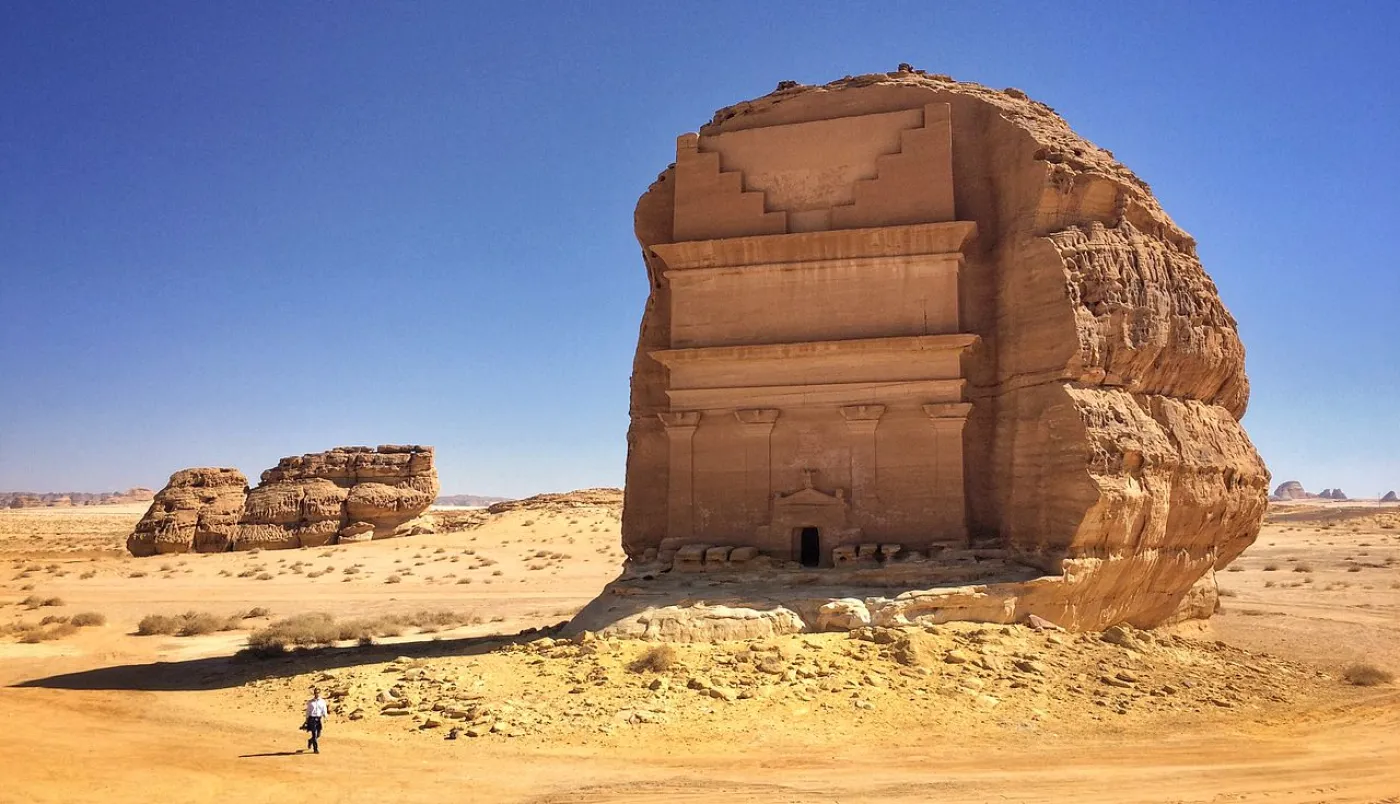
Four French tourists, part of a larger group that had been camping in the desert, were shot and killed by terrorists near Madain Saleh in early 2007. Due to this, mandatory police escorts — which can be an interesting experience, but can also be annoying, restrictive hassles — are sometimes provided for travel outside major cities, in areas like Abha, Najran and Madain Saleh.
Due to Saudi Arabia's involvement in the war against Houthi rebels in Yemen, there are occasional ballistic missile attacks against major Saudi cities and infrastructure. Follow the instructions of civil defense/emergency personnel if such attacks occur.