
Scavi archeologici di Ercolano
( Herculaneum )
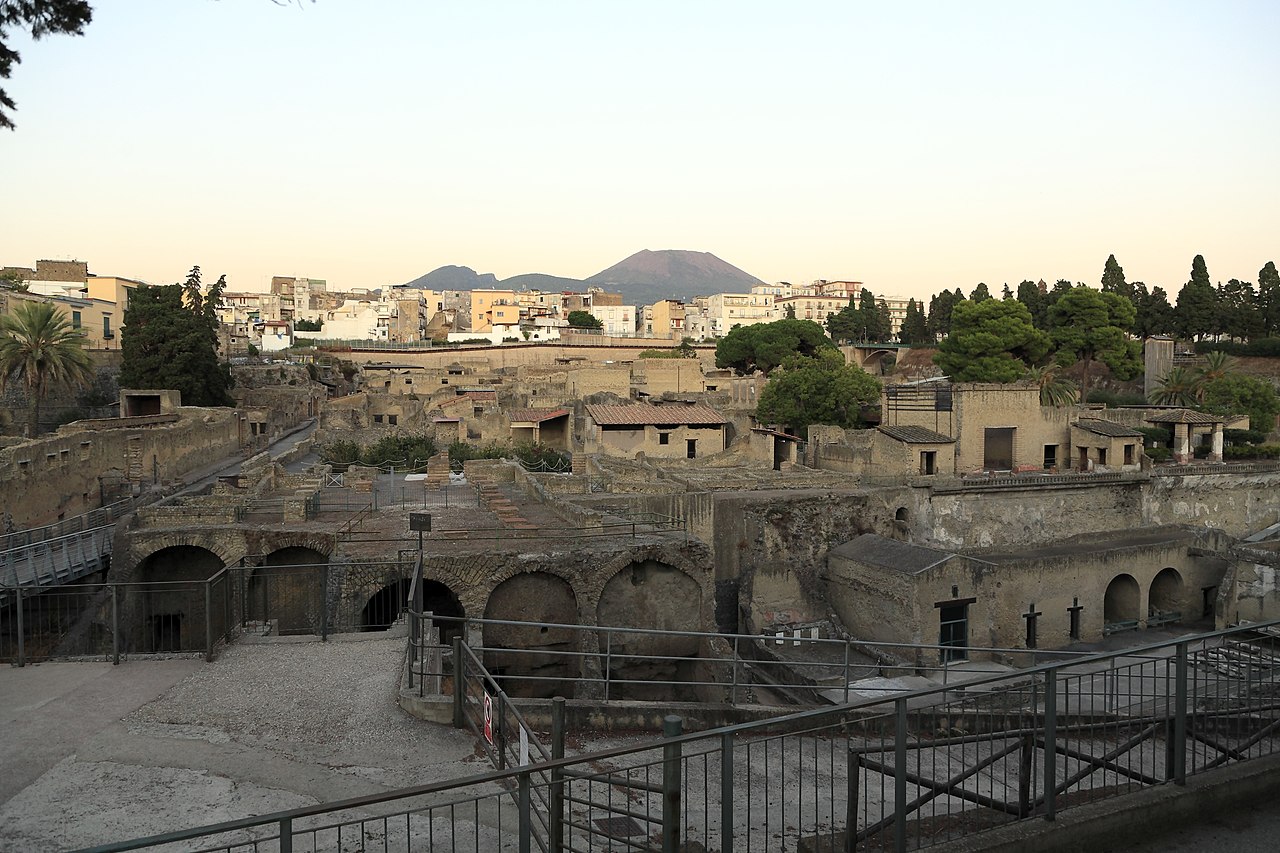
Herculaneum is an ancient Roman town located in the modern-day comune of Ercolano, Campania, Italy. Herculaneum was buried under a massive pyroclastic flow in the eruption of Mount Vesuvius in 79 AD.
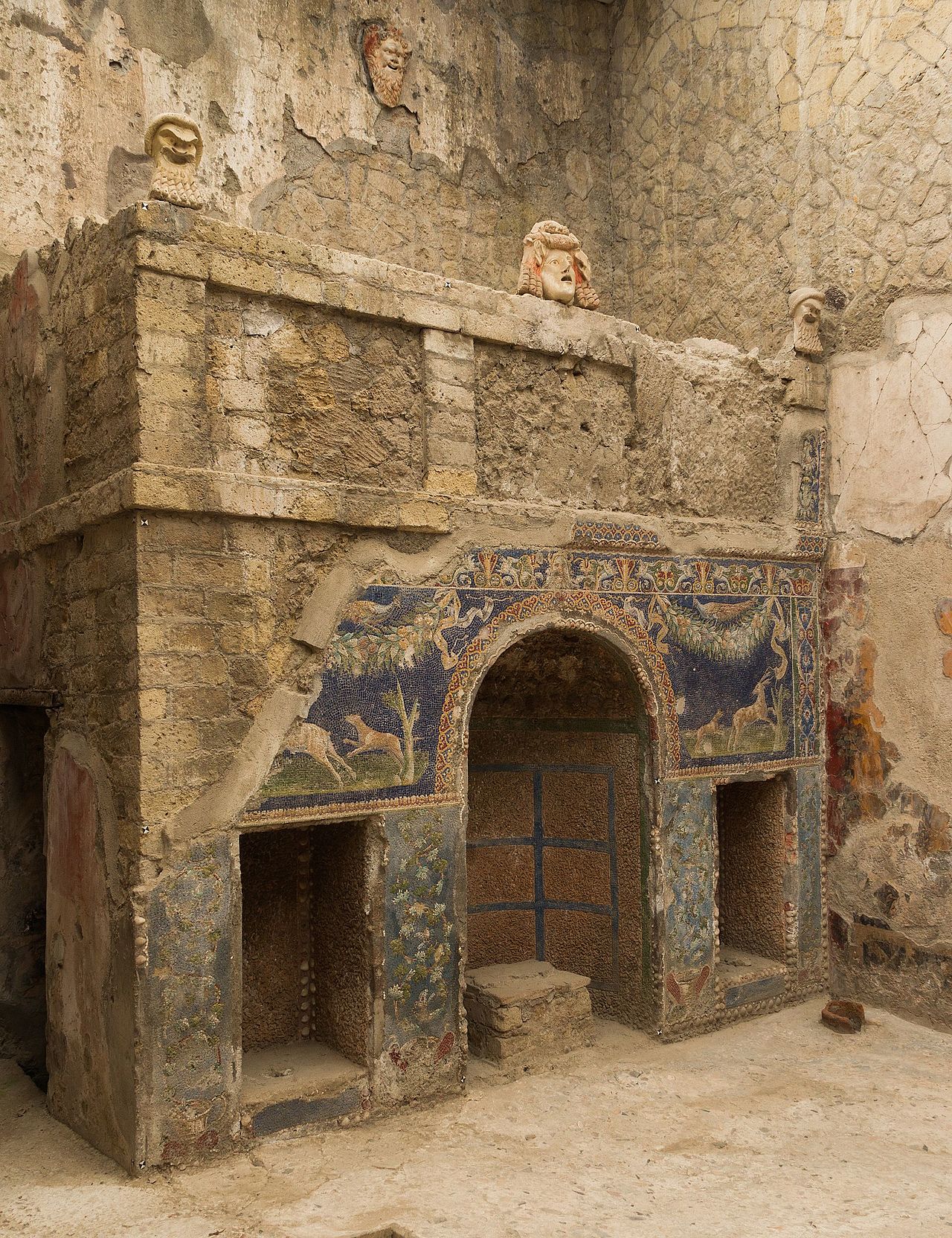
Like the nearby city of Pompeii, Herculaneum is famous as one of the few ancient cities to be preserved nearly intact, as the solidified material from the volcano that blanketed the town protected it against looting and the elements. Although less known than Pompeii today, it was the first and, for a long time, the only discovered Vesuvian city (in 1709). Pompeii was revealed in 1748 and identified in 1763. Unlike Pompeii, the mainly pyroclastic material that covered Herculaneum carbonized and preserved more wooden objects such as roofs, beds, and doors, as well as other organic-based materials such as food and papyrus.
According to the traditional tale, the city was rediscovered by chance in 1709 during the drilling of a well. ...Read more
Herculaneum is an ancient Roman town located in the modern-day comune of Ercolano, Campania, Italy. Herculaneum was buried under a massive pyroclastic flow in the eruption of Mount Vesuvius in 79 AD.
Like the nearby city of Pompeii, Herculaneum is famous as one of the few ancient cities to be preserved nearly intact, as the solidified material from the volcano that blanketed the town protected it against looting and the elements. Although less known than Pompeii today, it was the first and, for a long time, the only discovered Vesuvian city (in 1709). Pompeii was revealed in 1748 and identified in 1763. Unlike Pompeii, the mainly pyroclastic material that covered Herculaneum carbonized and preserved more wooden objects such as roofs, beds, and doors, as well as other organic-based materials such as food and papyrus.
According to the traditional tale, the city was rediscovered by chance in 1709 during the drilling of a well. Remnants of the city, however, were already found during earlier earthworks. In the years following the site's uncovering, treasure seekers excavated tunnels and took artifacts. Regular excavations commenced in 1738 and have continued irregularly since. Today, only a fraction of the ancient site has been excavated. The focus has shifted to preserving the already-excavated portions of the city rather than exposing more.
Smaller than Pompeii with a population of circa 5,000, Herculaneum was a wealthier town. It was a seaside retreat for the Roman elite, as reflected by the extraordinary density of luxurious houses featuring lavish use of coloured marble cladding. Buildings of the ancient city include the Villa of the Papyri and the so-called "boat houses", wherein the skeletal remains of at least 300 people were found.






Add new comment