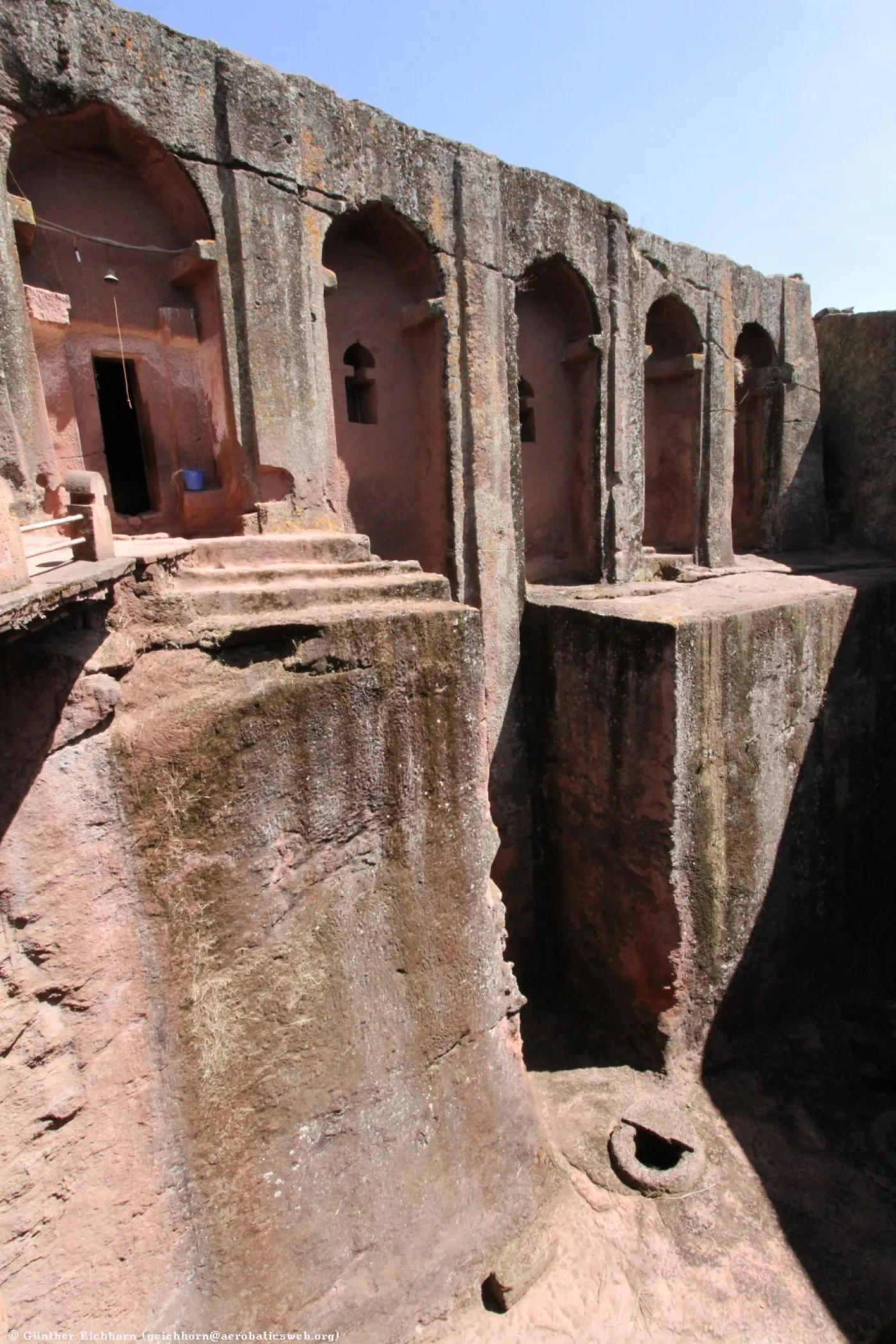

Ethiopia
Context of Ethiopia
Ethiopia, officially the Federal Democratic Republic of Ethiopia, is a landlocked country located in the Horn of Africa region of East Africa. It shares borders with Eritrea to the north, Djibouti to the northeast, Somalia to the east, Kenya to the south, South Sudan to the west, and Sudan to the northwest. Ethiopia covers a land area of 1,104,300 square kilometres (426,400 sq mi). As of 2024, it has around 132 million inhabitants, making it the tenth-most populous country in the world, the second-most populous in Africa after Nigeria, and the most populated landlocked country on Earth. The national capital and largest city, Addis Ababa, lies several kilometres west of the East African Rift that splits the country into the African and Somali tectonic plates.
Anatomically modern humans emerged from modern-day Ethiopia and set out for the Near East and elsewhere in the Middle Paleolithic period. In 980 BC, the Kingdom of D'mt exten...Read more
Ethiopia, officially the Federal Democratic Republic of Ethiopia, is a landlocked country located in the Horn of Africa region of East Africa. It shares borders with Eritrea to the north, Djibouti to the northeast, Somalia to the east, Kenya to the south, South Sudan to the west, and Sudan to the northwest. Ethiopia covers a land area of 1,104,300 square kilometres (426,400 sq mi). As of 2024, it has around 132 million inhabitants, making it the tenth-most populous country in the world, the second-most populous in Africa after Nigeria, and the most populated landlocked country on Earth. The national capital and largest city, Addis Ababa, lies several kilometres west of the East African Rift that splits the country into the African and Somali tectonic plates.
Anatomically modern humans emerged from modern-day Ethiopia and set out for the Near East and elsewhere in the Middle Paleolithic period. In 980 BC, the Kingdom of D'mt extended its realm over Eritrea and the northern region of Ethiopia, while the Kingdom of Aksum maintained a unified civilization in the region for 900 years. Christianity was embraced by the kingdom in 330, and Islam arrived by the first Hijra in 615. After the collapse of Aksum in 960, the Zagwe dynasty ruled the north-central parts of Ethiopia until being overthrown by Yekuno Amlak in 1270, inaugurating the Ethiopian Empire and the Solomonic dynasty, claimed descent from the biblical Solomon and Queen of Sheba under their son Menelik I. By the 14th century, the empire had grown in prestige through territorial expansion and fighting against adjacent territories; most notably, the Ethiopian–Adal War (1529–1543) contributed to fragmentation of the empire, which ultimately fell under a decentralization known as Zemene Mesafint in the mid-18th century. Emperor Tewodros II ended Zemene Mesafint at the beginning of his reign in 1855, marking the reunification and modernization of Ethiopia.
From 1878 onwards, Emperor Menelik II launched a series of conquests known as Menelik's Expansions, which resulted in the formation of Ethiopia's current border. Externally, during the late 19th century, Ethiopia defended itself against foreign invasions, including from Egypt and Italy; as a result, Ethiopia preserved its sovereignty during the Scramble for Africa. In 1936, Ethiopia was occupied by Fascist Italy and annexed with Italian-possessed Eritrea and Somaliland, later forming Italian East Africa. In 1941, during World War II, it was occupied by the British Army, and its full sovereignty was restored in 1944 after a period of military administration. The Derg, a Soviet-backed military junta, took power in 1974 after deposing Emperor Haile Selassie and the Solomonic dynasty, and ruled the country for nearly 17 years amidst the Ethiopian Civil War. Following the dissolution of the Derg in 1991, the Ethiopian People's Revolutionary Democratic Front (EPRDF) dominated the country with a new constitution and ethnic-based federalism. Since then, Ethiopia has suffered from prolonged and unsolved inter-ethnic clashes and political instability marked by democratic backsliding. From 2018, regional and ethnically based factions carried out armed attacks in multiple ongoing wars throughout Ethiopia.
Ethiopia is a multi-ethnic state with over 80 different ethnic groups. Christianity is the most widely professed faith in the country, with the largest denomination being the Ethiopian Orthodox Tewahedo Church. After Christianity, Ethiopia houses a significant minority of adherents to Islam and a small percentage to traditional faiths. This sovereign state is a founding member of the UN, the Group of 24, the Non-Aligned Movement, the Group of 77, and the Organisation of African Unity. Addis Ababa is the headquarters of the African Union, the Pan African Chamber of Commerce and Industry, the United Nations Economic Commission for Africa, the African Standby Force and many of the global non-governmental organizations focused on Africa. Ethiopia became a full member of BRICS in 2024. Ethiopia is one of the least developed countries but is sometimes considered an emerging power, having the fastest economic growth in sub-Saharan African countries because of foreign direct investment in expansion of agricultural and manufacturing industries; agriculture is the country's largest economic sector, accounting for over 37% of the gross domestic product as of 2022. However, in terms of per capita income and the Human Development Index, the Ethiopian economy has experienced consistent growth, though the country remains among the poorest in Africa. Ethiopia faces numerous challenges, including high rates of poverty, human rights violations, widespread ethnic discrimination, and a literacy rate of 52%.
More about Ethiopia
- Currency Ethiopian birr
- Calling code +251
- Internet domain .et
- Mains voltage 220V/50Hz
- Democracy index 3.38
- Population 128691692
- Area 1104300
- Driving side right
- Stay safe
Risks in Ethiopia
Crime/violence: Low
...Read more
Alcohol-related violence, petty theft
HIV/AIDS: Low
2-3 % of the adult population or 1 in 50 infected
Authorities/corruption: Low - Middle
Security guards might be rude
Transportation: High
Wild animal crossings everywhere; bad roads
Health: Middle
Flea, tick and mosquito bites
Nature: LowStay safeRead lessRisks in Ethiopia
Crime/violence: Low
Ethiopia is a relatively low-crime country compared to Kenya, Mexico and South Africa. Avoid travelling to the eastern part of the country beyond the city of Harar. Somali separatist groups occasionally launch guerrilla attacks. Most expats who go there are US military personnel actively training the Ethiopian army's anti-terrorism unit. Many others are Chinese, Indian or Malaysian representatives of oil companies, who have been targeted in major guerrilla attacks resulting in dozens of casualties. Harar is safe for extended stays, and Jijiga is generally also safe for short trips. Armed insurgent groups operate in the Afar region. In 2012 an Afari group attacked tourists in the Danakil Depression, killing five European tourists, and kidnapping two others. The Ethiopian government alleges that this was sponsored by its rival, Eritrea. In 2008, a hotel in the town of Jijiga and two hotels in the town of Negele Borena were bombed. Organized crime and gang violence are very unusual in most parts of the country. However, in the border areas of Sudan (Gambella Region) and Kenya, there are reports indicating occurrences of banditry. Avoid these areas. Though Ethiopia has a secular government, the people are very religious. The two dominant religions (the Ethiopian Orthodox Church and Islam) strongly influence day-to-day life. Due to their influence the government implements certain rules and laws that could appear unsettling to westerners. In particular, homosexuality is illegal and is not tolerated. Compared to other African countries, robbery is not a major problem in the cities and towns. However, travellers are advised to look after their belongings. Travellers should be cautious at all times when travelling on roads in Ethiopia. There have been reports of highway robbery, including car-jacking, by armed bandits outside urban areas. Some incidents have been accompanied by violence. Travellers are cautioned to limit road travel outside major towns or cities to daylight hours and travel in convoys, if possible. Travellers with vehicles and cyclists may often be the target of stoning by local youths when driving in rural areas. Traffic accidents, both for pedestrians and vehicle passengers/drivers are common — Ethiopia is one of the most dangerous places in the world to drive. These accidents are often fatal. Pedestrians frequently walk into the middle of the road without looking, vehicles do not use mirrors and traffic lanes are more of a guideline than a rule. It is highly advisable to hire a driver and to travel in the largest vehicle reasonably possible, to maximize safety. Always keep doors locked and do not lower windows enough for beggars to put their hands in (distracting a driver while robbing through the passenger side window is a common tactic). Most federal police and some private security guards carry rifles. This is common, and should not be cause for alarm — it is simply cheaper for them to purchase and repair these weapons than more "traditional" police tools like pistols and pepper spray. The federal police are generally well trained and very effective in their jobs, and can be distinguished by their blue camouflage uniforms. City police wear a solid blue shirt, and are less reliable. Traffic police wear a blue uniform with white hat and sleeves, and are generally the least reliable of the city police. For a few years, there have been anti-government movements in the south and especially in the Oromia region. The largest minority, the Oromia people, are disadvantaged by the homogeneous government. In August 2016 Protests in the Oromia region were violently suppressed and protesters were killed in Gondar and Bahir Dar. The major bus companies shut down their service during the protests and roads were blocked, especially on the weekends. Avoid large crowds and keep an eye for an unusual concentration of security personnel.
Alcohol-related violence, petty theft
HIV/AIDS: Low
2-3 % of the adult population or 1 in 50 infected
Authorities/corruption: Low - Middle
Security guards might be rude
Transportation: High
Wild animal crossings everywhere; bad roads
Health: Middle
Flea, tick and mosquito bites
Nature: Low