
The Qutub Shahi tombs are a series of Islamic tombs and mosques built by the various kings of the Qutub Shahi dynasty, located in the Ibrahim Bagh (garden precinct), close to the famous Golconda Fort in Hyderabad, in the Hyderabad district of the state of Telangana, India.
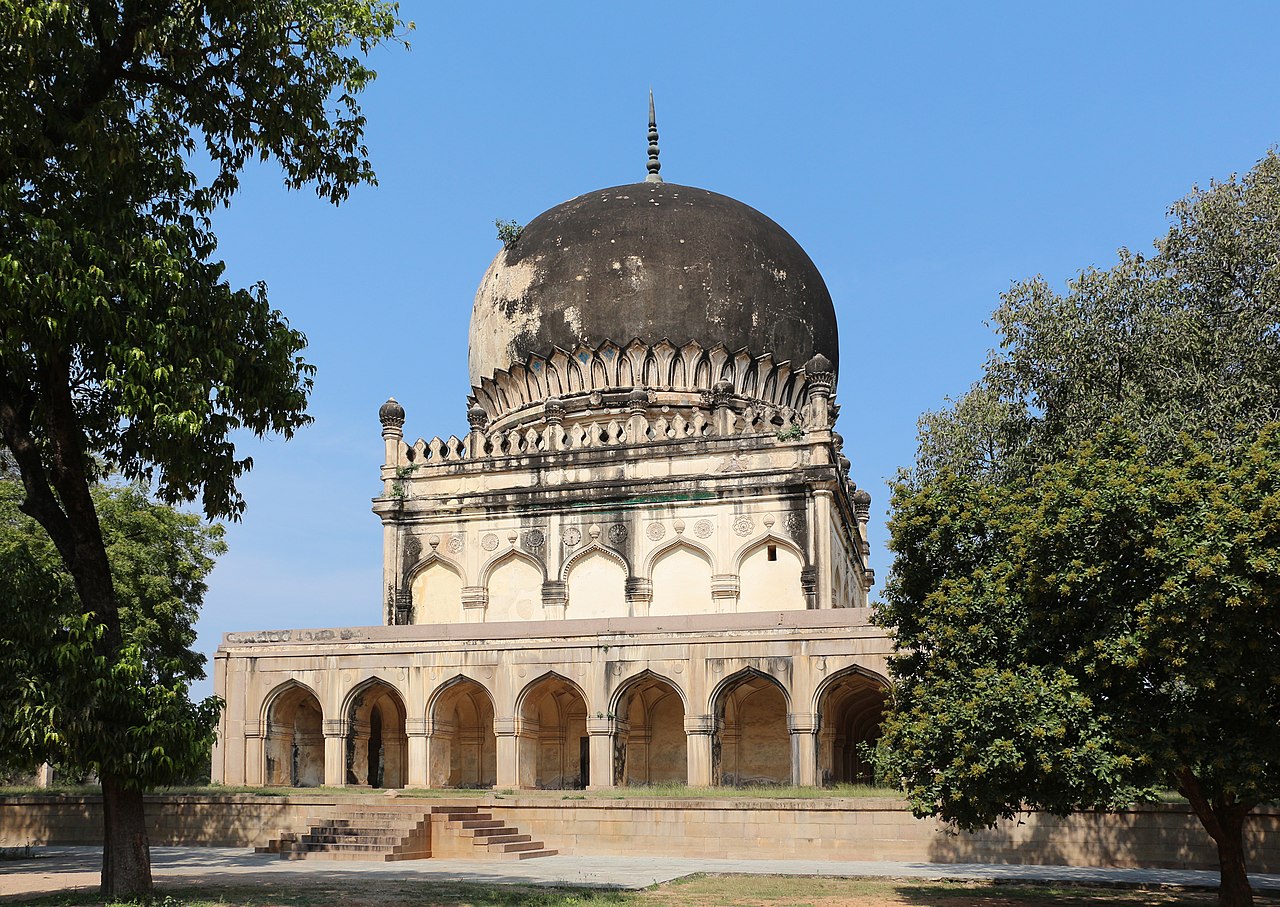
A stunning and concentrated example of Indo-Islamic and Qutb Shahi architecture, the galleries of the smaller tombs are of a single storey while the larger ones are two-storied. In the centre of each tomb is a sarcophagus which overlies the actual burial vault in a crypt below. The domes were originally overlaid with blue and green tiles, of which only a few pieces now remain.
The tomb complex forms part of the Golkonda Fort, Fortifications, a Monument of National Importance, administered by the Archaeological Survey of India. In 2014, UNESCO placed the complex on its "tentative list" to become a World Heritage Site, with others in the region, under the name M...Read more
The Qutub Shahi tombs are a series of Islamic tombs and mosques built by the various kings of the Qutub Shahi dynasty, located in the Ibrahim Bagh (garden precinct), close to the famous Golconda Fort in Hyderabad, in the Hyderabad district of the state of Telangana, India.
A stunning and concentrated example of Indo-Islamic and Qutb Shahi architecture, the galleries of the smaller tombs are of a single storey while the larger ones are two-storied. In the centre of each tomb is a sarcophagus which overlies the actual burial vault in a crypt below. The domes were originally overlaid with blue and green tiles, of which only a few pieces now remain.
The tomb complex forms part of the Golkonda Fort, Fortifications, a Monument of National Importance, administered by the Archaeological Survey of India. In 2014, UNESCO placed the complex on its "tentative list" to become a World Heritage Site, with others in the region, under the name Monuments and Forts of the Deccan Sultanate (despite there being a number of different sultanates).





Add new comment