
Canada
Context of Canada
Canada is a country in North America. Its ten provinces and three territories extend from the Atlantic Ocean to the Pacific Ocean and northward into the Arctic Ocean, making it the world's second-largest country by total area, with the world's longest coastline. Its border with the United States is the world's longest international land border. The country is characterized by a wide range of both meteorologic and geological regions. With a population of over 41 million people, it has widely varying population densities, with the majority residing in urban areas and large areas of the country being sparsely populated. Canada's capital is Ottawa and its three largest metropolitan areas are Toronto, Montreal, and Vancouver.
Indigenous peoples have continuously inhabited what is now Canada for thousands of years. Beginning in the 16th century, British and French expeditions explored and later settle...Read more
Canada is a country in North America. Its ten provinces and three territories extend from the Atlantic Ocean to the Pacific Ocean and northward into the Arctic Ocean, making it the world's second-largest country by total area, with the world's longest coastline. Its border with the United States is the world's longest international land border. The country is characterized by a wide range of both meteorologic and geological regions. With a population of over 41 million people, it has widely varying population densities, with the majority residing in urban areas and large areas of the country being sparsely populated. Canada's capital is Ottawa and its three largest metropolitan areas are Toronto, Montreal, and Vancouver.
Indigenous peoples have continuously inhabited what is now Canada for thousands of years. Beginning in the 16th century, British and French expeditions explored and later settled along the Atlantic coast. As a consequence of various armed conflicts, France ceded nearly all of its colonies in North America in 1763. In 1867, with the union of three British North American colonies through Confederation, Canada was formed as a federal dominion of four provinces. This began an accretion of provinces and territories resulting in the displacement of Indigenous populations, and a process of increasing autonomy from the United Kingdom. This increased sovereignty was highlighted by the Statute of Westminster, 1931, and culminated in the Canada Act 1982, which severed the vestiges of legal dependence on the Parliament of the United Kingdom.
Canada is a parliamentary democracy and a constitutional monarchy in the Westminster tradition. The country's head of government is the prime minister, who holds office by virtue of their ability to command the confidence of the elected House of Commons and is appointed by the governor general, representing the monarch of Canada, the ceremonial head of state. The country is a Commonwealth realm and is officially bilingual (English and French) in the federal jurisdiction. It is very highly ranked in international measurements of government transparency, quality of life, economic competitiveness, innovation, education and human rights. It is one of the world's most ethnically diverse and multicultural nations, the product of large-scale immigration. Canada's long and complex relationship with the United States has had a significant impact on its history, economy, and culture.
A developed country, Canada has a high nominal per capita income globally and its advanced economy ranks among the largest in the world by nominal GDP, relying chiefly upon its abundant natural resources and well-developed international trade networks. Recognized as a middle power, Canada's support for multilateralism and internationalism has been closely related to its foreign relations policies of peacekeeping and aid for developing countries. Canada promotes its domestically shared values through participation in multiple international organizations and forums.
More about Canada
- Currency Canadian dollar
- Native name Canada
- Calling code +1
- Internet domain .ca
- Mains voltage 120V/60Hz
- Democracy index 9.24
- Population 10377000
- Area 9984670
- Driving side right
- Stay safe
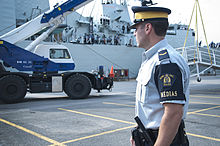 Royal Canadian Mounted Police officer
Safety in Canada is not usually a problem, and some basic common sense will go a long way. Even in the largest cities, violent crime is not a serious problem, and very few people are ever armed. Violent crime needn't worry the average traveller, as it is generally confined to particular neighbourhoods and is rarely a random crime. Overall crime rates in Canadian cities remain low compared to most similar sized urban areas in the United States and much of the rest of the world (though violent crime rates are higher than most western European cities). Crime is higher in overall in western provinces than in Eastern Canada, but is even higher in the Yukon, Northwest Territories and Nunavut. There have been several high-profile shootings in public/tourist areas; the fact these incidents are so heavily covered by the media is related to the fact that they are considered very rare events.
If you travel near the Canadian-U.S. border, please make sure that you do not accidentally enter the United States in a place where the border is not clearly marked. If you do, you could be subject to lengthy interrogation and possible jail time.
PolicingPolice in Canada are usually hardworking, honest, and trustworthy individuals. If you ever encounter any problems during your stay, even if it's as simple as being lost, approaching a police officer is a good idea.
There are three main types of police forces in Canada: federal, provincial and municipal. The federal police force is the Royal Canadian Mounted Police (RCMP or "Mounties"), with a widespread presence in all parts of the country other than Quebec, Ontario, and Newfoundland & Labrador, which maintain their own provincial police forces. These are the Ontario Provincial Police (OPP), the Sûreté du Québec (SQ) and the Royal Newfoundland Constabulary. All the other provinces and territories (and some rural portions of Newfoundland as well as Labrador) contract their provincial duties to the RCMP.
...Read moreStay safeRead less
Royal Canadian Mounted Police officerSafety in Canada is not usually a problem, and some basic common sense will go a long way. Even in the largest cities, violent crime is not a serious problem, and very few people are ever armed. Violent crime needn't worry the average traveller, as it is generally confined to particular neighbourhoods and is rarely a random crime. Overall crime rates in Canadian cities remain low compared to most similar sized urban areas in the United States and much of the rest of the world (though violent crime rates are higher than most western European cities). Crime is higher in overall in western provinces than in Eastern Canada, but is even higher in the Yukon, Northwest Territories and Nunavut. There have been several high-profile shootings in public/tourist areas; the fact these incidents are so heavily covered by the media is related to the fact that they are considered very rare events.
If you travel near the Canadian-U.S. border, please make sure that you do not accidentally enter the United States in a place where the border is not clearly marked. If you do, you could be subject to lengthy interrogation and possible jail time.
PolicingPolice in Canada are usually hardworking, honest, and trustworthy individuals. If you ever encounter any problems during your stay, even if it's as simple as being lost, approaching a police officer is a good idea.
There are three main types of police forces in Canada: federal, provincial and municipal. The federal police force is the Royal Canadian Mounted Police (RCMP or "Mounties"), with a widespread presence in all parts of the country other than Quebec, Ontario, and Newfoundland & Labrador, which maintain their own provincial police forces. These are the Ontario Provincial Police (OPP), the Sûreté du Québec (SQ) and the Royal Newfoundland Constabulary. All the other provinces and territories (and some rural portions of Newfoundland as well as Labrador) contract their provincial duties to the RCMP.
In their capacity as a federal police force, RCMP officers typically wear regular police uniforms and drive police cruisers while performing their duties. However, a minority of RCMP officers may appear in their iconic red dress uniform in tourist areas, and for official functions such as parades. Some RCMP officers participate in elaborate ceremonies such as the Musical Ride horse show. While wearing their full dress uniform, their main function is to promote the image of Canada and Canadian Mounties. RCMP officers in full dress are generally not tasked with investigating crime or enforcing the law, although they are still police officers and can perform arrests. In some tourist regions, such as Ottawa, both types of RCMP officers are commonly encountered. This dual-role and dual-appearance of the RCMP, both as federal police, and as a tourist attraction, may create confusion among tourists as to the function of the RCMP. All RCMP officers are police officers, and have a duty to enforce the law.
Cities, towns and regions often have their own police forces, with the Toronto, Vancouver and Montreal forces being three of the largest. Some cities also have special transit police who have full police powers. Some quasi-government agencies, such as universities and power utilities also employ private special police. The Canadian National Railway and Canadian Pacific Railway each have their own police force. Some First Nations reserves also have their own police force. Canadian Forces Military Police can be found at military bases and other defence-related government facilities.
All three types of police forces can enforce any type of law, be it federal, provincial or municipal. Their jurisdiction overlaps, with the RCMP being able to arrest anywhere in Canada, the OPP and municipal police officers being able to arrest anywhere within their own province. Powers of arrest for Federal, Provincial and municipal police agencies in Canada exist for officers both on, and off duty.
In the national capital region of Ottawa-Gatineau, one can encounter more police jurisdictions than in any other part of Canada. The Royal Canadian Mounted Police (both regular uniformed and full dress), the Ontario Provincial Police, the Ottawa police, the Sûreté du Québec, the Gatineau Police, Military Police, and OC Transpo Special Constables, all operate in the region, each with a different style of uniform and police cruiser.
Do not under any circumstances attempt to offer a bribe to a police officer, as this is a crime, and they will enforce laws against it.
TheftIf you are unfortunate enough to get your purse or wallet snatched, the local police will do whatever they can to help. Often, important identification is retrieved after thefts of this sort. In large cities, parked cars are sometimes targeted for opportunistic smash-and-grab thefts, so try to avoid leaving any possessions in open view. Due to the high incidence of such crimes, motorists in Montreal and some other jurisdictions can be fined for leaving their car doors unlocked or for leaving valuables in view. Take a picture of your licence plate and check that your plates are still in place before you go somewhere as some thieves will steal plates to avoid getting pulled over. Auto theft in Montreal, including theft of motor homes and recreational vehicles, may occur in patrolled and overtly secure parking lots and decks. Bike theft can be a common nuisance in metropolitan areas.
Winter storms See also: Cold weather View from behind the wheel in Saskatchewan in the winter
Canada is very prone to winter storms (including ice storms and blizzards) from November through March. In Eastern Canada, they are the most likely, but the occasional small one will pop up west of Northwest Ontario usually there it is wind-whipped snow that is the main hazard. Reduce speed, be conscious of other drivers, and pay attention. It's best to carry an emergency kit, in case you have no choice but to spend the night stuck in snow on the highway (yes, this does happen occasionally, especially in more isolated areas). If you are unfamiliar with winter driving and choose to visit Canada during the winter months, consider using another mode of transportation to travel within the country. While the vast majority of winter weather occurs during the winter months, some parts of Canada such as the Prairies, Labrador, Northern Canada, and mountain regions may experience severe, if brief, winter-like conditions at any time during the year.
If you are touring on foot, it is best to bundle up as much as possible in layers with heavy socks, thermal underwear and gloves; winter storms can bring with them extreme winds alongside frigid temperatures and frostbite can occur in a matter of minutes.
Firearms and weaponsUnlike the US, Canada has no constitutional rights relating to gun ownership. Possession, purchase, and use of any firearms requires proper licences for the weapons and the user, and is subject to federal laws. Firearms are classed (mainly based on barrel length) as non-restricted (subject to the least amount of training and licensing), restricted (more licensing and training required) and prohibited (not legally available). Most rifles and shotguns are non-restricted, as they are used extensively for hunting, on farms, or for protection in remote areas. Handguns or pistols are restricted weapons, but may be obtained and used legally with the proper licences.
Generally the only people who carry handguns are Police, Border Services Officers, Wildlife Officers in most provinces, private security guards who transport money, people who work in remote "wilderness" areas who are properly licensed, and sport shooters who specialize in pistol shooting.
As a general rule, you are not allowed to carry guns for self-defence in Canada. It is possible to import non-prohibited firearms such as most types of rifle and shotgun for sporting purposes like target shooting and hunting, and non-prohibited handguns for target shooting may also be imported with the correct paperwork.
All firearms must be declared to customs on entry into Canada, even if unrestricted, and failing to do so is a criminal offence punishable by fines and imprisonment. Prohibited firearms, such as military-grade assault rifles, will be seized at customs and destroyed. Air soft guns that are replica firearms are prohibited. Travellers should check with the Canada Firearms Centre and the Canada Border Services Agency before importing firearms of any type before arrival.
Switchblades, butterfly knives, spring loaded blades and any other knife that opens automatically are classified as Prohibited and are illegal in Canada, as are Nunchucks, Tasers and other electric stun guns, most devices concealing knives, such as belt buckle knives and knife combs, and articles of clothing or jewellery designed to be used as weapons. Mace and pepper spray are also illegal unless sold specifically for use against animals.
Cannabis and other drugs Note: Under no circumstances should you attempt to bring any amount of any controlled substance into or out of Canada. This includes marijuana, even though it is legal to use marijuana in Canada. It is also illegal to take marijuana from Canada to any U.S. state where marijuana is legal and vice versa, including bordering states such as Alaska, Washington, and Vermont. Penalties in Canada for drug smuggling (into or out of the country) can be severe, with life sentences possible.
Canada (Information last updated Mar 2020)Marijuana use is legal in Canada since October 17, 2018, and every adult is allowed to possess up to 30 grams (1 ounce) of dried marijuana at a time. Each province has licensed some retail stores to carry cannabis products or has provided them for order over the internet. It remains illegal to buy cannabis from anyone other than a licensed shop; the punishment is theoretically jail time and although it is rarely prosecuted it could easily lead a foreigner to be deported. For advice on where to get legal weed in Canada, see the Wikivoyage guide of the province or cities you will be visiting. Cities also generally have "smoking bylaws" that restrict where one can legally smoke tobacco and these also apply to marijuana. The punishment for breaking these bylaws is generally a large fine, but not jail time. Private businesses are also allowed to prohibit smoking on their property, and many hotels would not take kindly to the smell of weed in their rooms. The law on providing marijuana to minors remains extremely strict, and would certainly result in deportation or jail time if convicted.
Driving while impaired by drugs (including marijuana and even legal "drowsy" drugs) is a criminal code offence and is treated in the same way as driving under the influence of alcohol, with severe penalties. Do not attempt to drive while high; visitors can expect to be deported after serving jail time or paying very large fines.
Khat is illegal in Canada, and will get you arrested and deported if you try to pack it in your luggage and get caught by customs.
Drunk driving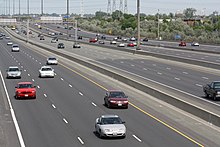 Ontario Highway 401
Canadians take drunk driving very seriously, and it is a social taboo in most circles to drink and drive. Driving while under the influence of alcohol or marijuana is also punishable under the Criminal Code of Canada and can involve jail time, particularly for repeat offences. If you "blow over" the legal limit of blood alcohol content (BAC) on a roadside Breathalyzer machine test, you will be arrested and spend at least a few hours in jail. Being convicted for driving under the influence (DUI) will almost certainly mean the end of your trip to Canada, a criminal record and you being barred from re-entering Canada for at least 5 years. 80 mg of alcohol per 100ml of blood (0.08%) is the legal limit for a criminal conviction. Many jurisdictions call for fines, licence suspension and vehicle impoundment at 40 mg of alcohol per 100 ml of blood (0.04%), or if the officer reasonably believes you are too intoxicated to drive. While having a BAC of 0.03% when tested at a police checkpoint ('Checkstop' or 'ride-stop', which is designed to catch drunk drivers) will not result in arrest, having the same BAC after being pulled over for driving erratically, or after getting involved in an accident may result in being charged with DUI.
Those crossing the land border into Canada from the USA while driving under the influence will get arrested by the Border Services Officers.
Refusing a breathalyzer test is also a Criminal Code offence, and will result in the same penalties as had you blown over. If a police officer demands that you supply a breath sample, your best option is to take your chances with the machine.
Hate speech and discriminationCanada is a very multicultural society, and the vast majority of Canadians are open minded and accepting. Thus, it is unlikely to meet ridicule on the basis of race, gender, religion or sexual orientation — while this does happen on occasion, it's rare enough that such ridicule is aired as a local news story even in the largest cities.
Hate speech — communication that may incite violence toward an identifiable group — is illegal in Canada and can lead to prosecution, jail time, and deportation. Similarly, Canadian law also prohibits any form of discrimination in education and employment.