
El jardín de las delicias
( The Garden of Earthly Delights )
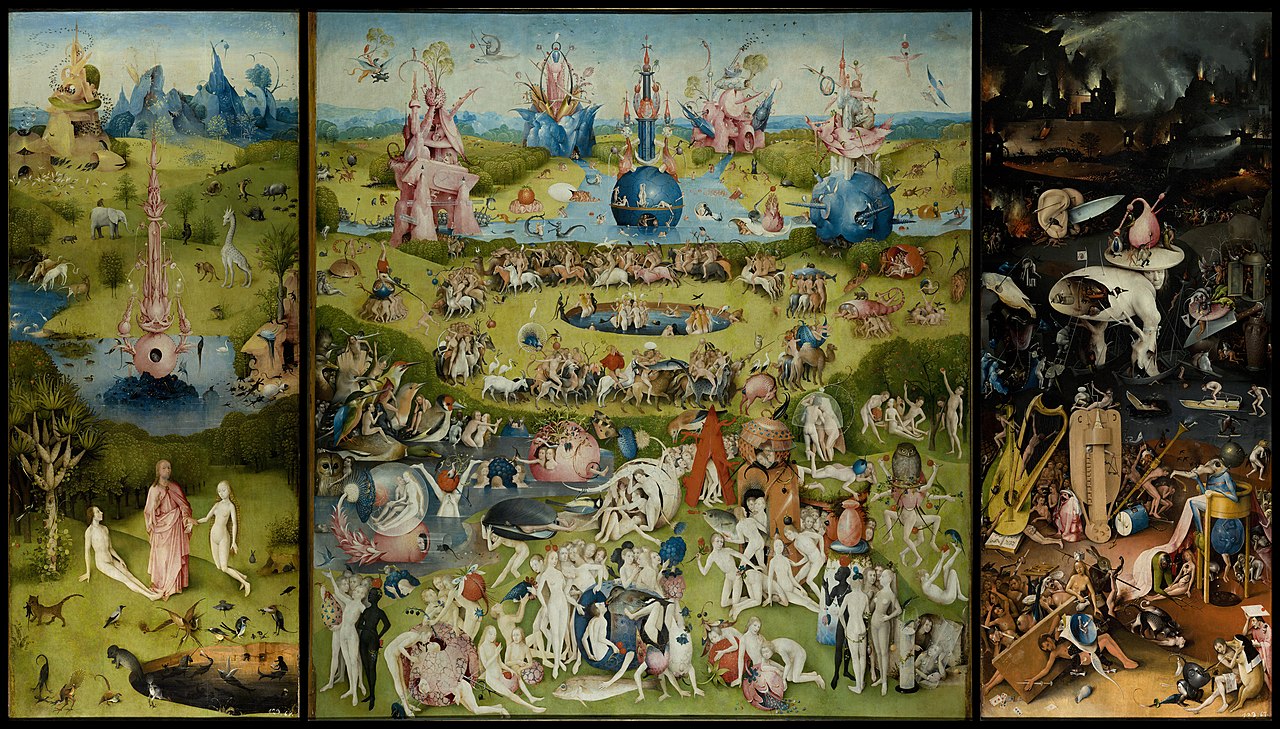
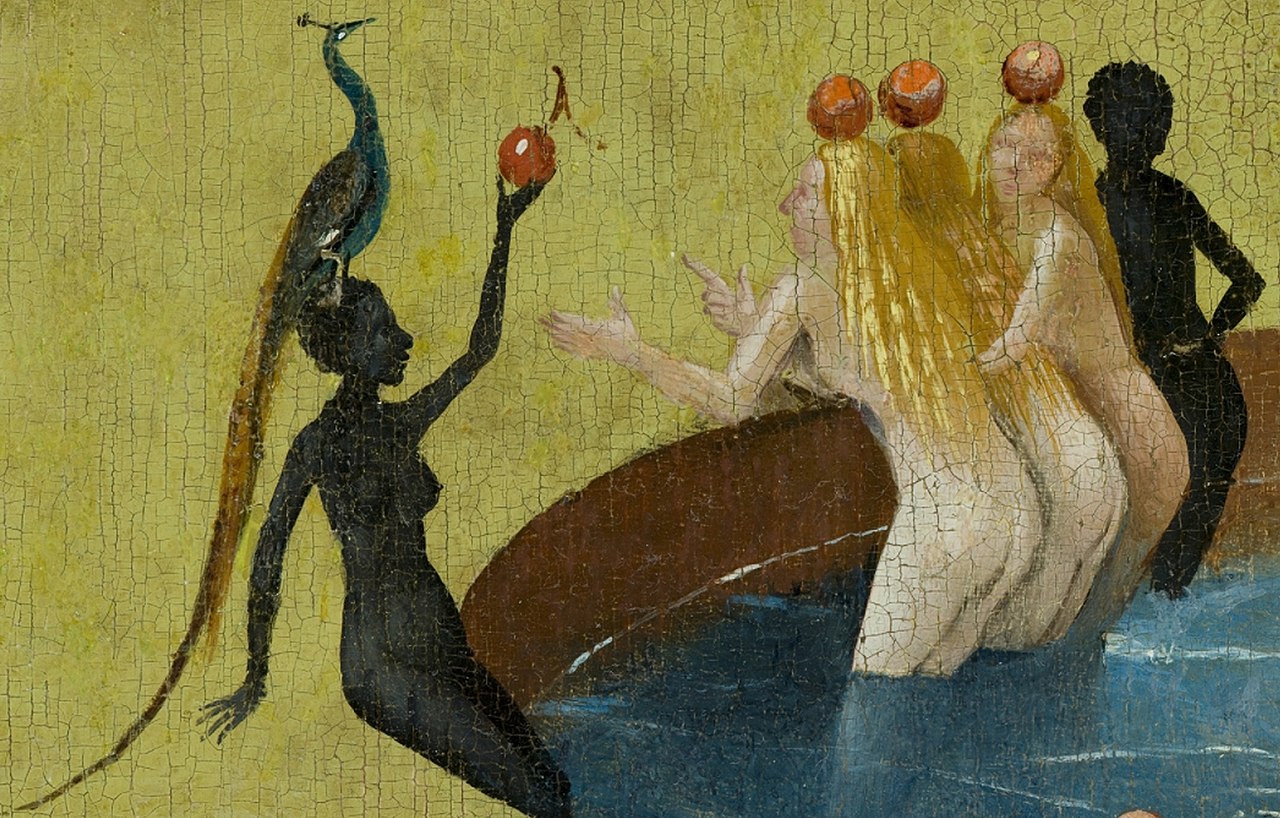
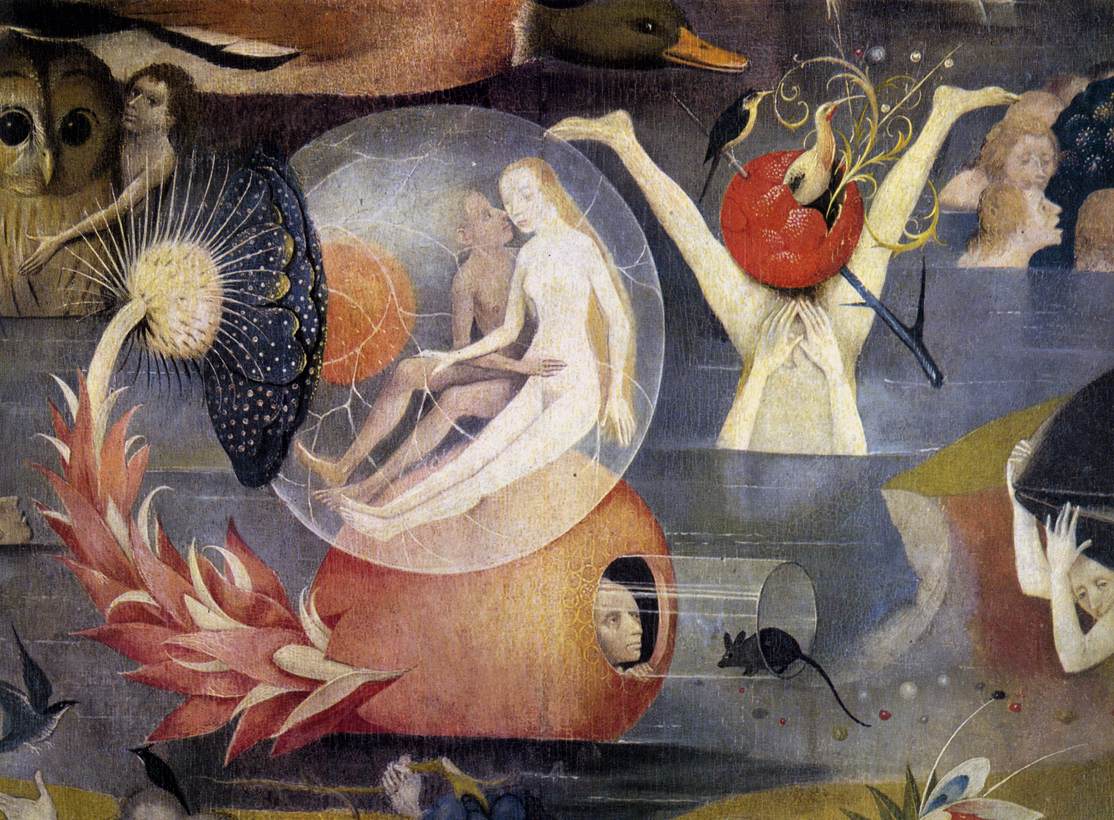
The Garden of Earthly Delights (Dutch: De tuin der lusten, lit. 'The garden of lusts') is the modern title given to a triptych oil painting on oak panels painted by the Early Netherlandish master Hieronymus Bosch, between 1490 and 1510, when Bosch was between 40 and 60 years old. Bosch's religious beliefs are unknown, but interpretations of the work typically assume it is a warning against the perils of temptation. The outer panels place the work on the Third Day of Creation. The intricacy of its symbolism, particularly that of the central panel, has led to a wide range of scholarly interpretations over the centuries.
Twentieth-century art historians are divided as to whether the triptych's central panel is a moral warning or a panorama of the paradise lost. He painted three large triptychs (the others are The Last Judgment of c. 1482 and The Haywain Triptych ...Read more
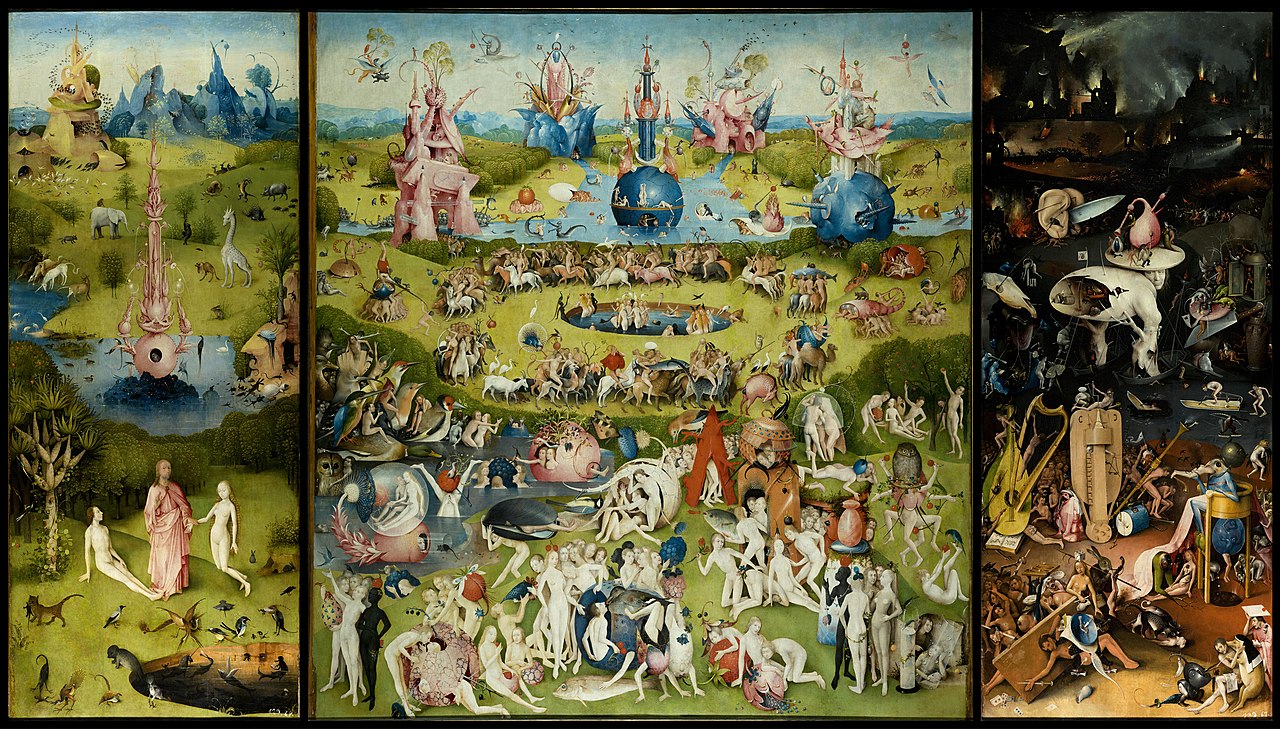
The Garden of Earthly Delights (Dutch: De tuin der lusten, lit. 'The garden of lusts') is the modern title given to a triptych oil painting on oak panels painted by the Early Netherlandish master Hieronymus Bosch, between 1490 and 1510, when Bosch was between 40 and 60 years old. Bosch's religious beliefs are unknown, but interpretations of the work typically assume it is a warning against the perils of temptation. The outer panels place the work on the Third Day of Creation. The intricacy of its symbolism, particularly that of the central panel, has led to a wide range of scholarly interpretations over the centuries.
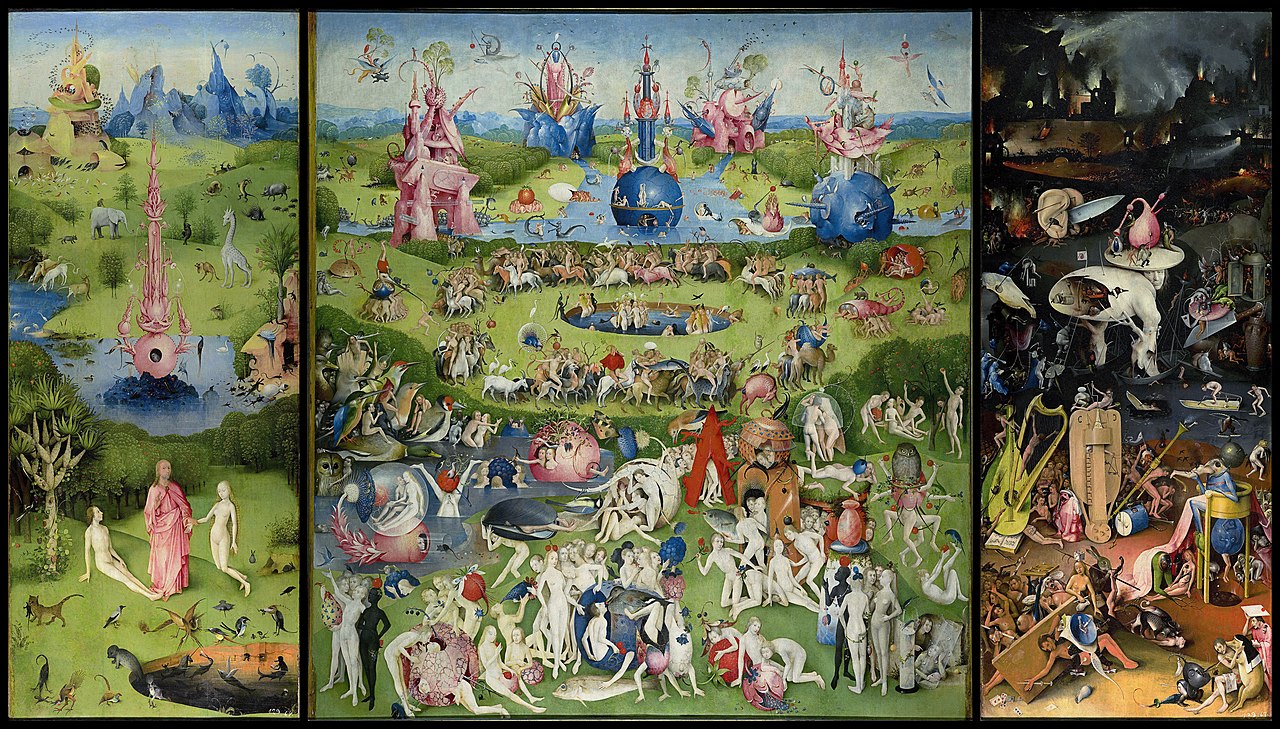
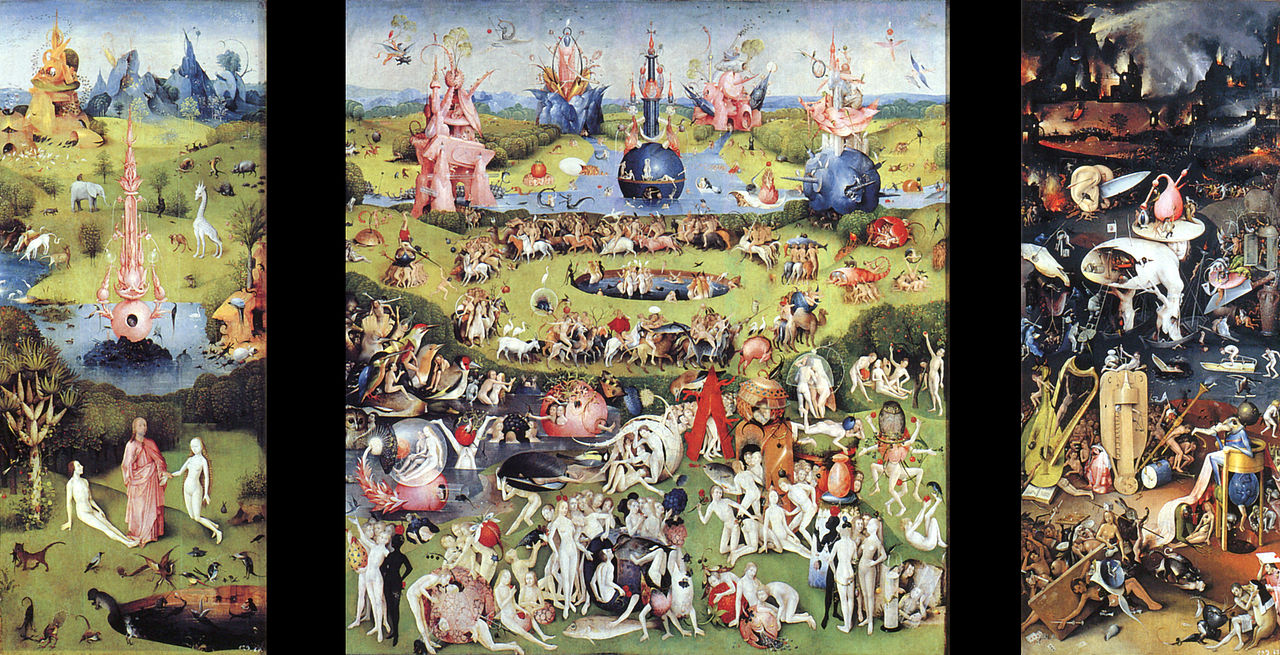
Twentieth-century art historians are divided as to whether the triptych's central panel is a moral warning or a panorama of the paradise lost. He painted three large triptychs (the others are The Last Judgment of c. 1482 and The Haywain Triptych of c. 1516) that can be read from left to right and in which each panel was essential to the meaning of the whole. Each of these three works presents distinct yet linked themes addressing history and faith. Triptychs from this period were generally intended to be read sequentially, the left and right panels often portraying Eden and the Last Judgment respectively, while the main subject was contained in the centerpiece.
It is not known whether The Garden was intended as an altarpiece, but the general view is that the extreme subject matter of the inner center and right panels make it unlikely that it was planned for a church or monastery. It has been housed in the Museo del Prado in Madrid, Spain since 1939.










Add new comment