
United Kingdom
Context of United Kingdom
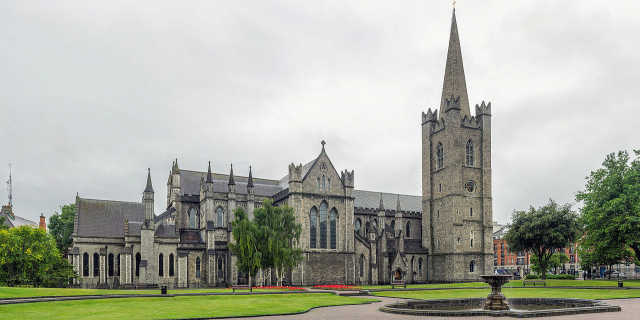
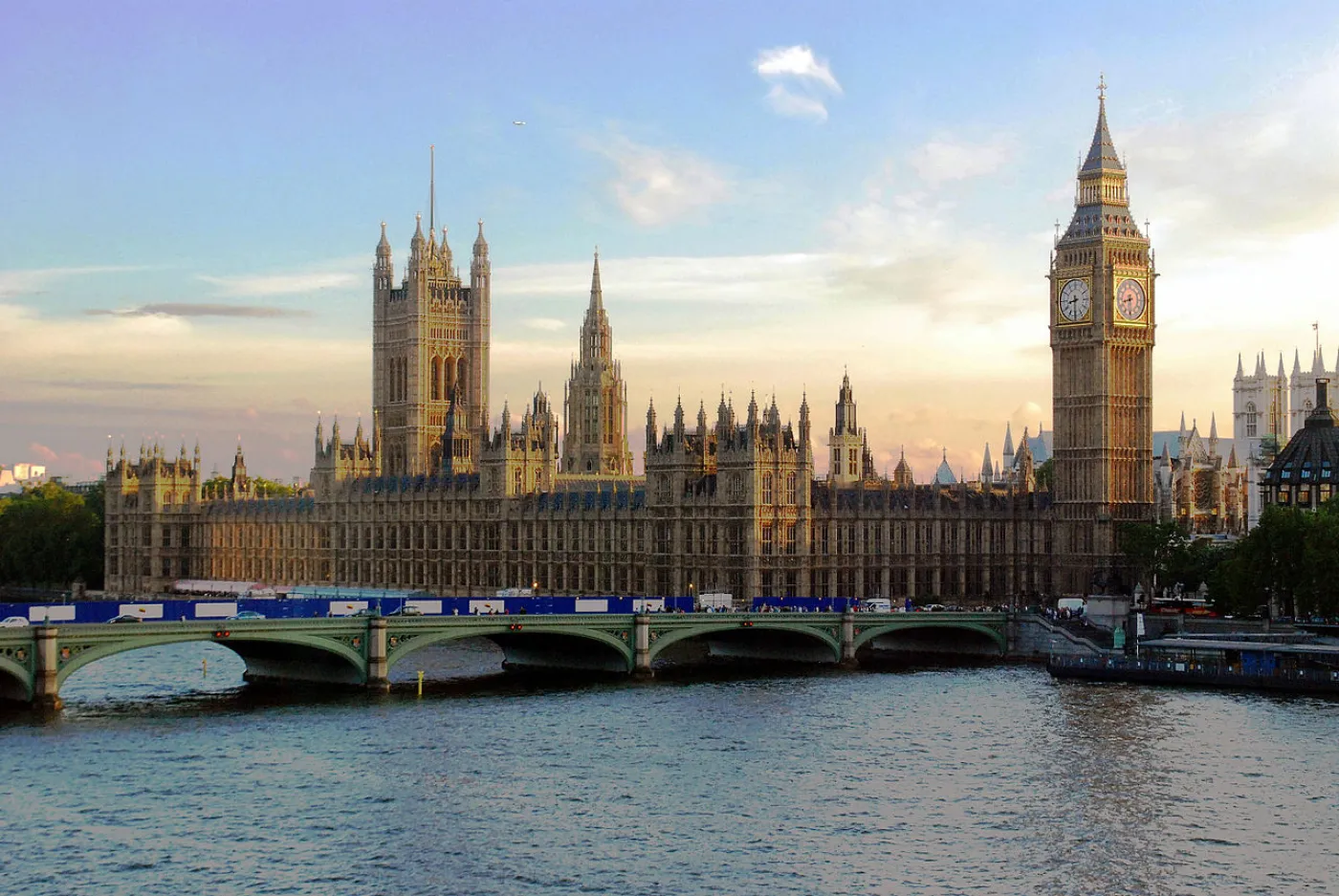
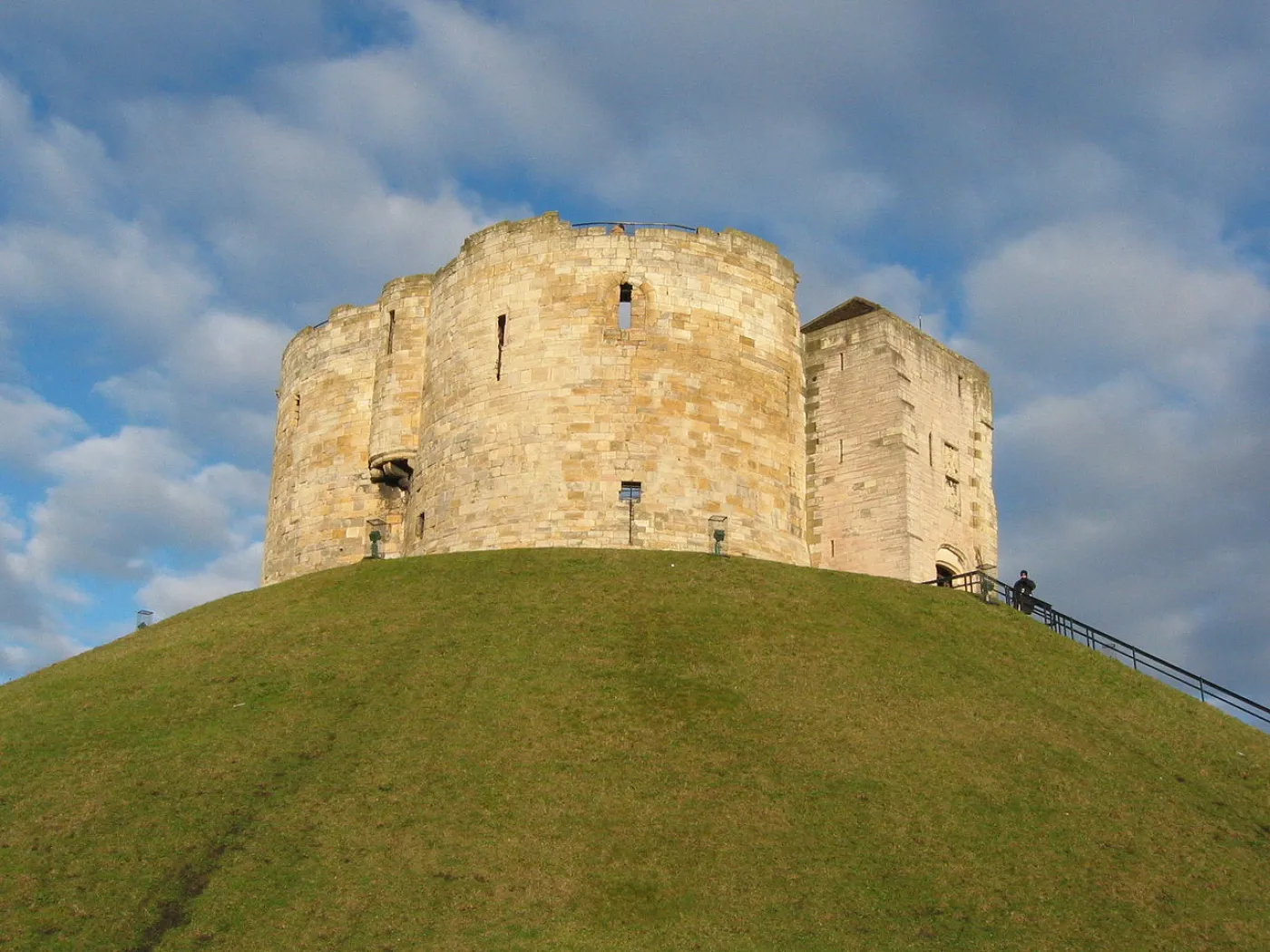
The United Kingdom of Great Britain and Northern Ireland, commonly known as the United Kingdom (UK) or Britain, is a country in Northwestern Europe, off the coast of the continental mainland. It comprises England, Scotland, Wales and Northern Ireland. The UK includes the island of Great Britain, the north-eastern part of the island of Ireland, and most of the smaller islands within the British Isles, covering 94,354 square miles (244,376 km2). Northern Ireland shares a land border with the Republic of Ireland; otherwise, the UK is surrounded by the Atlantic Ocean, the North Sea, the English Channel, the Celtic Sea and the Irish Sea. It maintains sovereignty over the British Overseas Territories, which are located across various oceans and seas globally. The UK had an estimated population of over 68.2 million people in 2023. The capital and largest city of both England and the UK is London. The cities of Edinburg...Read more
The United Kingdom of Great Britain and Northern Ireland, commonly known as the United Kingdom (UK) or Britain, is a country in Northwestern Europe, off the coast of the continental mainland. It comprises England, Scotland, Wales and Northern Ireland. The UK includes the island of Great Britain, the north-eastern part of the island of Ireland, and most of the smaller islands within the British Isles, covering 94,354 square miles (244,376 km2). Northern Ireland shares a land border with the Republic of Ireland; otherwise, the UK is surrounded by the Atlantic Ocean, the North Sea, the English Channel, the Celtic Sea and the Irish Sea. It maintains sovereignty over the British Overseas Territories, which are located across various oceans and seas globally. The UK had an estimated population of over 68.2 million people in 2023. The capital and largest city of both England and the UK is London. The cities of Edinburgh, Cardiff and Belfast are the national capitals of Scotland, Wales and Northern Ireland.
The UK has been inhabited continuously since the Neolithic. In AD 43 the Roman conquest of Britain began; the Roman departure was followed by Anglo-Saxon settlement. In 1066 the Normans conquered England. With the end of the Wars of the Roses the Kingdom of England stabilised and began to grow in power, resulting by the 16th century in the annexation of Wales and the establishment of the British Empire. Over the course of the 17th century the role of the British monarchy was reduced, particularly as a result of the English Civil War. In 1707 the Kingdom of England and the Kingdom of Scotland united under the Treaty of Union to create the Kingdom of Great Britain. In the Georgian era the office of prime minister became established. The Acts of Union 1800 incorporated the Kingdom of Ireland to create the United Kingdom of Great Britain and Ireland in 1801. Most of Ireland seceded from the UK in 1922 as the Irish Free State, and the Royal and Parliamentary Titles Act 1927 created the present United Kingdom.
The UK became the first industrialised country and was the world's foremost power for the majority of the 19th and early 20th centuries, particularly during the Pax Britannica between 1815 and 1914. The British Empire was the leading economic power for most of the 19th century, a position supported by its agricultural prosperity, its role as a dominant trading nation, a massive industrial capacity, significant technological achievements, and the rise of 19th-century London as the world's principal financial centre. At its height in the 1920s the empire encompassed almost a quarter of the world's landmass and population, and was the largest empire in history. However, its involvement in the First World War and the Second World War damaged Britain's economic power, and a global wave of decolonisation led to the independence of most British colonies.
The UK is a constitutional monarchy and parliamentary democracy. It has three distinct jurisdictions: England and Wales, Scotland, and Northern Ireland. Since 1999 Scotland, Wales and Northern Ireland have their own governments and parliaments which control various devolved matters. A developed country with an advanced economy, the UK ranks amongst the largest economies by nominal GDP, and is one of the world's largest exporters and importers. It is a nuclear state with one of the world's highest military budgets. Its soft power influence can be observed in the legal and political systems of many of its former colonies, and British culture remains globally influential, particularly in language, literature, music and sport. English is the world's most-widely-spoken language and the third-most-spoken native language. The UK is part of multiple international organisations and forums.
More about United Kingdom
- Currency Pound sterling
- Calling code +44
- Internet domain .uk
- Mains voltage 230V/50Hz
- Democracy index 8.54
- Population 27368800
- Area 242495
- Driving side left
- Stay safe
In general the UK is a safe place to visit; you won't go far wrong heeding the general advice and the advice for Europe.
Emergency servicesAre you in crisis?
Samaritans is a free and confidential nationwide 24 hour telephone hotline for people in emotional distress. The concept is simple: you talk, they listen. Please don't suffer alone; call a Samaritan on ☏ 116 123 (in country only).
In any emergency call 999 or 112 (free of charge from any phone, including mobiles). All such calls are free and will be answered by an emergency services operator who will ask you which services you need (police, fire, ambulance, coastguard or mountain and cave rescue) and for your location. Be as precise as possible, and don't forget to say the town or city, as the operator may be based remotely. Unlike many other countries, the United Kingdom does not have different numbers for different emergency services.
...Read moreStay safeRead lessIn general the UK is a safe place to visit; you won't go far wrong heeding the general advice and the advice for Europe.
Emergency servicesAre you in crisis?
Samaritans is a free and confidential nationwide 24 hour telephone hotline for people in emotional distress. The concept is simple: you talk, they listen. Please don't suffer alone; call a Samaritan on ☏ 116 123 (in country only).
In any emergency call 999 or 112 (free of charge from any phone, including mobiles). All such calls are free and will be answered by an emergency services operator who will ask you which services you need (police, fire, ambulance, coastguard or mountain and cave rescue) and for your location. Be as precise as possible, and don't forget to say the town or city, as the operator may be based remotely. Unlike many other countries, the United Kingdom does not have different numbers for different emergency services.
You can call 999 or 112 from any mobile telephone, even if you do not have roaming enabled. As in all other countries, it is a serious crime to call this number without due cause, the official criteria being, an immediate serious threat to life or safety. In making an emergency call, give as much information about your location (and that of the incident needing attention) as possible. Official call boxes will typically have location plate giving this, but a street name or building name can also be given. In rural or remote areas, giving a precise map (or GPS) reference will assist immensely. In addition the operator may prompt you for additional information which will allow categorisation of the emergency to prioritise the response. With variable mobile coverage in some areas, mobiles can call the 999 or 112 emergency number even when they only have coverage from a network other than from their own provider. Unlike normal roaming, only 999 or 112 emergency calls will be passed; whilst you can call the emergency services, they cannot call you back. Even if your phone shows No Signal, in an emergency it is still worth trying as you may be in coverage of another network who will handle your 999 (or 112) emergency call. In some incidents the emergency operator may ask you to stay on the line, so they can provide additional information, or monitor for situational changes. In such situations, do not hang up until they advise that you can.
In a non-emergency situation you can call 101 to report crime and concerns to the local police that do not require an emergency response. A similar service is available at 111 for health issues that do not require urgent A&E admission.
Police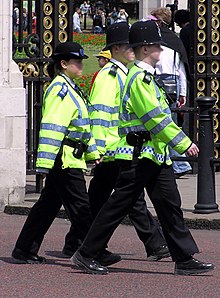 A group of British police officers on patrol.
ID Cards
Unlike many other countries, British people do not have ID Cards and are not required to carry identification on them at all times. A police officer will not ask to arbitrarily see your ID, although it may save you a good deal of time to have one if they believe you are a 'person of interest'. Additionally, under 25s who look like they may be minors are routinely asked for some form of official ID when purchasing alcohol or tobacco, or when entering bars or nightclubs with on-door security. A European driving licence is a popular form of ID in the United Kingdom, although a non-European driving license, ID card or passport from your home country is sufficient.
On the whole, British police officers tend to be professional and trustworthy, and are generally less aggressive than law enforcement agencies in many other developed nations. However, this does not mean they are lenient, and they will intervene if a situation is assessed as needing a police response. Front line police officers will also not be hesitant in responding to sincerely expressed safety concerns, such as unattended baggage, lost children, or individuals that have 'had too much' alcohol.
With local exceptions, such as airports, nuclear power plants and some government buildings, the vast majority of police officers in Great Britain do not carry firearms on standard patrol, and the only police officers allowed to carry firearms are those from specialist firearms units. The exception is the police in Northern Ireland who routinely carry firearms due to the historical political tension.
Most officers will only speak English, though you will be able to speak to an interpreter over police radio if you can't understand questioning in English. You have the right to an interpreter at the police station, as well as a solicitor (lawyer) that can be provided for you free of charge if you are to be interviewed. You have a right to remain silent when interviewed. However, in all parts of the UK except Scotland this right is qualified; your silence can be held against you in court in certain circumstances.
No instant penalties are payable in cash to a police officer and street-level corruption is for all practical purposes non-existent. Under UK law, bribing a police officer is a very serious crime for both the officer accepting and person offering the bribe.
Police officers in Great Britain wear dark blue uniforms, although officers in Northern Ireland wear dark green uniforms. Front-line police (in uniform) are also generally required to have shoulder numbers. Most British police are also required to carry a 'warrant card' , and should under reasonable circumstances be willing to produce it, to confirm their authority.
Policing on the mainland rail network, is the responsibility of the British Transport Police, who have similar powers and responsibilities to other police in the UK.
In addition to police officers with full powers, in some areas the UK has Community Support Officers, whose powers are more limited, and are generally concerned with policing issues of a less serious nature, freeing up police officers to handle more serious offences.
Private security guards do not generally have any "police-style" powers at all. There are a small number of non-police officials who have limited enforcement powers relating to specific local areas; or certain activities such as on-street parking, use of public spaces; or concerning local bylaws. Railway staff also have specific responsibilities with respect to the Railway's Bylaws and Conditions of Carriage.
All British people have the right to make a citizens arrest, where they can arrest and temporarily detain people who have committed a indictable offence until the arrival of the police who will take custody of the offender.
On the roadsAlthough jaywalking is not an offence in the UK, crossing a road other than at a designated crossing should be taken with care. A number of traffic light crossings have a push button to change the 'man' from red to green. Pedestrian crossings in some cities (notably London) have countdown timers, to indicate when the lights will revert to red. Pedestrians have right of way on zebra crossings, that are identified by white stripes on the road and yellow flashing lights. It is advisable to make eye contact with the driver before stepping into the road. Certain roads prohibit pedestrians (and cylicsts), this is often marked with signs in clearly visible locations.
Public transportBritain's transport network does not generally have any major safety issues. Major incidents are exceptionally rare (despite the media attention). Vigilance about security and safety issues (such as suspect packages, and unattended luggage) is however appreciated, and the employees of transport organizations are generally appreciative of appropriately voiced concerns.
RacismOvert racism is not common in the UK and racially motivated violence is rare. The government strongly encourages the notion of a multi-cultural society, but high levels of immigration have caused debate and the rise of political figures against immigration levels. Nevertheless, the UK is generally regarded by most of its own immigrant population as being among the most tolerant of European countries in this respect. Most Britons will go out of their way to make tourists and immigrants feel welcome and it is common for courts to impose harsh punishments on any form of racial abuse, physical or verbal. Current legislation prohibits hate speech as well as racial discrimination in a wide range of public spheres such as education and employment.
Amid the COVID-19 pandemic, there has been a spike in racist incidents targeting people of East Asian descent, with some East Asians having become victims of hate crimes including assaults.
Public drunkennessLate at night it is not uncommon to find rowdy groups of drunk people, especially young men, on the street, but unless you go out of your way to provoke trouble you are unlikely to experience any problems. The police have fairly wide ranging powers to fine or arrest people who are causing a disturbance, and although they can be more heavy-handed in major cities they are generally tolerant. Drinking alcohol in public (except outside a bar or pub) is not permitted in some towns and areas of cities.
Illegal drugsAll illegal drugs in the United Kingdom are classified under 'A', 'B' or 'C'. Class A drugs are typically regarded as the most dangerous and attract the most severe penalties (e.g. a prison sentence), especially for supplying. Class C are generally regarded as the least harmful and thus attract lesser penalties (e.g. a fine). Remember: all of these drugs are equally illegal and you can still be arrested for possession, supplying or using regardless of the class; the classes are used to determine policing priorities and penalties.
Class A drugs include ecstasy (MDMA), LSD, heroin and cocaine; penalties will mean arrest and prison even for possession. Magic mushrooms were previously legal because of technicalities in the law, but are now class A.
Cannabis is now a 'Class B' drug. A first offence for possession will usually result in a formal warning, or an on-the-spot fine. This does not apply to other Class B drugs, such as speed (where you will be imprisoned instead). Subsequent offences may result in arrest.
Examples of Class C include ketamine, some steroids, some prescription drugs such as Valium (legal if they are prescribed for you), GHB, Khat and some tranquillisers.
Don't assume, however, that something offered as a so called 'legal-high' is either legal, safe or even what it claims to be. Law enforcement in the UK have since 2016 had the power to act against all manner of these, and the potential for being sold something injurious is high.
Prescribed drugs will usually require a letter from a doctor to be imported, and having this documentation is useful if any queries arise. Where the drug is controlled (Class A, B or C) in the UK, a formal prescription, and confirmation of a qualified medical professional as to medical need or requirement, will be needed in all instances.
Sex and prostitutionThe age of sexual consent is 16 throughout the United Kingdom, although teenagers under 18 are also still legally regarded as children, meaning that images of under-18s, whether they are above the age of consent or not, is classed as child pornography and most definitely illegal. Ask for proof of age, e.g. driving licence if in doubt.
Homosexuality is very widely accepted by the British public, and almost all discrimination and all hate speech relating to sexual orientation is illegal.
Attitudes to prostitution in the United Kingdom are considerably less liberal than some other European countries, and are closer to the conservative views held in the United States.
Brothels of any kind are illegal and it's against the law to loiter or solicit sex on the street. 'Kerb-crawling' (driving close to a pavement in order to ask prostitutes for sex) is also banned, and is actively monitored for by police patrols in many towns and cities across the country. Police also on a regular basis undertake crackdowns against both gangs and individuals that are using trafficked women in prostitution rackets. Police take a very dim view of such activity, and if you are caught, you will be subjected to lengthy questioning by the police, and charged.
Firearms and knivesThe UK has very strict laws with regards to firearm ownership. Handguns such as pistols and revolvers, as well as semi-automatic rifles are prohibited, even for sporting purposes, while a licence is required to own, carry or use any other type of firearm. Bringing a firearm into the UK is extremely difficult, and all visitors who wish to do so are required to obtain a permit well before their arrival in the UK.
Northern Ireland has its own firearms licensing regulations (most notably handguns are legal, and self-defense is a valid reason to acquire a license), so visitors who wish to transport their firearms between Northern Ireland and the rest of the UK are required to obtain permits from both the British and Northern Irish authorities in order to do so.
Knife crime is a problem in the UK, most acutely in London and other large cities, although not as great as press reports suggest. While the majority of knife attacks are perpetrated by criminal gangs against locals who are themselves in some way connected to crime, seemingly random and unprovoked attacks have also been carried out, sometimes against foreign visitors.
TerrorismThe UK has seen a number of terror attacks in the 21st century, many of which have targeted places you're likely to frequent as a tourist. British security services are on the whole adept at preventing attacks from occurring, and in the event of a successful attack, police and ambulance services have a track record for responding extremely quickly and professionally. While in some respects it is true that you can't do much in the face of an attack, there are precautions you can take. Stay abreast of the government's official threat level and keep an eye on local media before and during your visit. In the extremely unlikely event that you are caught up in a terror attack, the official advice is to run as far away from the attackers as possible, hide in the most secure place you can find, stay put as quietly and still as possible, and phone the police only if it is safe to do so.