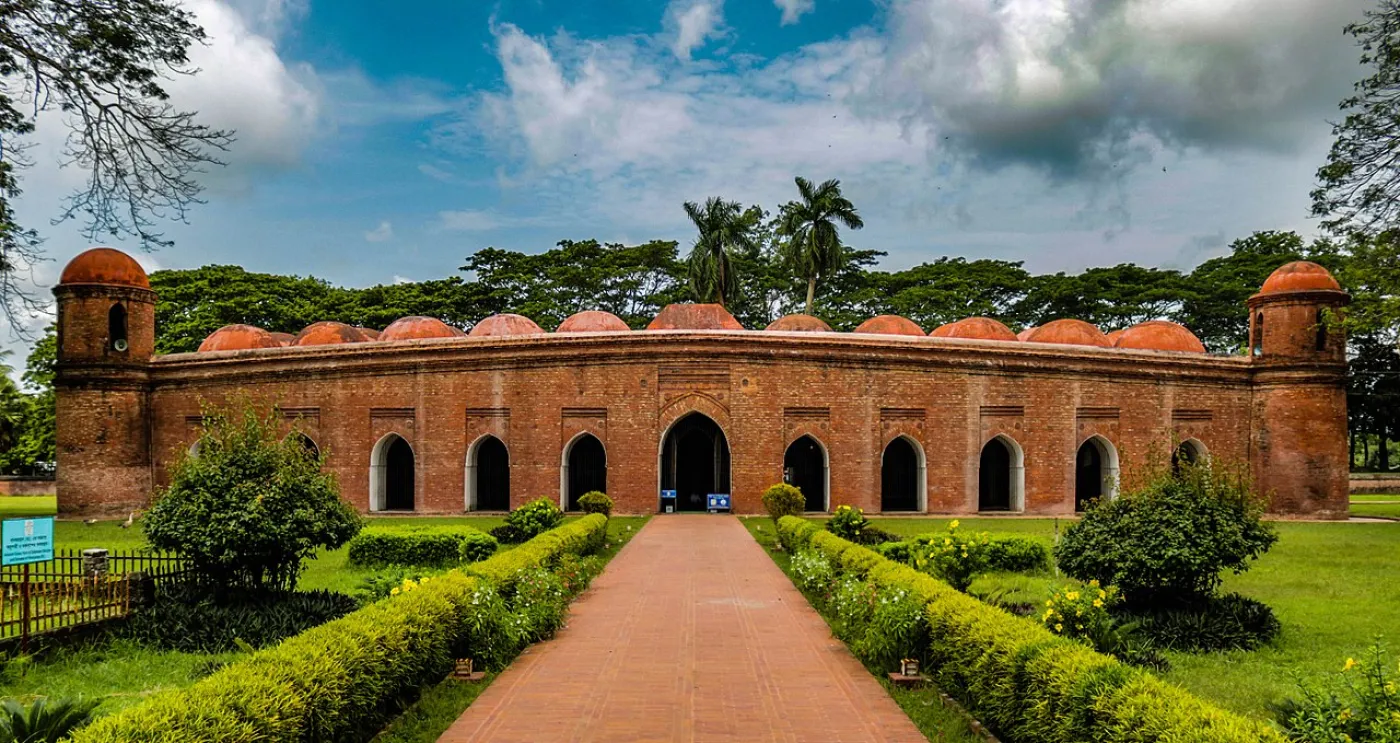

Bangladesh
Context of Bangladesh
Bangladesh, officially the People's Republic of Bangladesh, is a country in South Asia. It is the eighth-most populous country in the world and among the most densely populated with a population of over 171 million within an area of 148,460 square kilometres (57,320 sq mi). Bangladesh shares land borders with India to the north, west, and east, and Myanmar to the southeast. It has a coastline along the Bay of Bengal to its south and is separated from Bhutan and Nepal by the Siliguri Corridor, and from China by the Indian state of Sikkim to its north. Dhaka, the capital and largest city, is the nation's political, financial, and cultural centre. Chittagong is the second-largest city and the busiest port of the country.
The territory of modern Bangladesh was a stronghold of many Buddhist and Hindu dynasties in ancient history. Following the Muslim conquest in 1204, the region saw Sultanate and Mughal rule. During the Mughal period...Read more
Bangladesh, officially the People's Republic of Bangladesh, is a country in South Asia. It is the eighth-most populous country in the world and among the most densely populated with a population of over 171 million within an area of 148,460 square kilometres (57,320 sq mi). Bangladesh shares land borders with India to the north, west, and east, and Myanmar to the southeast. It has a coastline along the Bay of Bengal to its south and is separated from Bhutan and Nepal by the Siliguri Corridor, and from China by the Indian state of Sikkim to its north. Dhaka, the capital and largest city, is the nation's political, financial, and cultural centre. Chittagong is the second-largest city and the busiest port of the country.
The territory of modern Bangladesh was a stronghold of many Buddhist and Hindu dynasties in ancient history. Following the Muslim conquest in 1204, the region saw Sultanate and Mughal rule. During the Mughal period, particularly under the Bengal Subah, the region emerged as one of the most prosperous and commercially active parts of the empire, known for its thriving textile industry and agricultural productivity. The Battle of Plassey in 1757 marked the beginning of British colonial rule for the following two centuries. In the aftermath of the Partition of British India in 1947, East Bengal became the eastern and most populous wing of the newly formed Dominion of Pakistan and was later renamed to East Pakistan. Following over two decades of political repression and systematic racism from the West Pakistan-based government, East Pakistan experienced a civil war in 1971; ultimately leading to a war for independence. The Mukti Bahini, with assistance from Indian forces, waged a successful armed revolution; and at the expense of a genocide, Bangladesh became a sovereign nation on 16 December 1971. Post-Independence, Sheikh Mujibur Rahman led the country until his assassination in 1975. Presidency was later transferred to Ziaur Rahman, who himself was assassinated in 1981. The 1980s was dominated by the dictatorship of Hussain Muhammad Ershad, who was overthrown in a mass uprising in 1990. Following the democratisation in 1991, the "Battle of the Begums" between Khaleda Zia and Sheikh Hasina defined the country's politics for the next three decades. Hasina was overthrown in a student–led mass uprising in August 2024, and an interim government led by Nobel laureate Muhammad Yunus was formed.
Bangladesh is a unitary parliamentary republic based on the Westminster system. It is a middle power with the second-largest economy in South Asia. Bangladesh is home to the third-largest Muslim population in the world and the fifth-most spoken native language. It maintains the third-largest military in South Asia and is the largest contributor to the peacekeeping operations of the United Nations. It consists of eight divisions, 64 districts, and 495 sub-districts, and is home to the largest mangrove forest in the world. However, Bangladesh has one of the largest refugee populations in the world and continues to face challenges such as endemic corruption, lack of human rights, political instability, overpopulation, and adverse effects of climate change. It has twice chaired the Climate Vulnerable Forum and is a member of BIMSTEC, SAARC, OIC and the Commonwealth of Nations.
More about Bangladesh
- Currency Bangladeshi taka
- Calling code +880
- Internet domain .bd
- Mains voltage 220V/50Hz
- Democracy index 5.99
- Population 171466990
- Area 147570
- Driving side left
- Stay safe
Dial 999 from any Bangladeshi mobile phone number or landline for police, fire or ambulance in case of any emergency. Bangladesh is a country full of friendly and open-minded people. But some people may find ways to exploit a foreigner or tourist. See common scams and pickpockets for some of their methods. Apply common sense precautions, such as not walking around unnecessarily or alone after dark in abandoned alleys. Also, if you do find yourself in trouble, create some noise and draw the attention of others who are almost certain to come to your aid. Foreigners, particularly Caucasian, will for the most part be safe when walking around city streets as you will undoubtedly be watched by multiple curious locals at any one time. When in a crowd or travelling by rickshaw, CNG (auto-rickshaw) or bus, be careful to keep valuables close at hand and away from pickpockets. Don't wear expensive jewellery without precaution; most middle-class locals simply wear imitation gold/silver jewellery and rhinestones/clay and beaded pendants.
...Read moreStay safeRead lessDial 999 from any Bangladeshi mobile phone number or landline for police, fire or ambulance in case of any emergency. Bangladesh is a country full of friendly and open-minded people. But some people may find ways to exploit a foreigner or tourist. See common scams and pickpockets for some of their methods. Apply common sense precautions, such as not walking around unnecessarily or alone after dark in abandoned alleys. Also, if you do find yourself in trouble, create some noise and draw the attention of others who are almost certain to come to your aid. Foreigners, particularly Caucasian, will for the most part be safe when walking around city streets as you will undoubtedly be watched by multiple curious locals at any one time. When in a crowd or travelling by rickshaw, CNG (auto-rickshaw) or bus, be careful to keep valuables close at hand and away from pickpockets. Don't wear expensive jewellery without precaution; most middle-class locals simply wear imitation gold/silver jewellery and rhinestones/clay and beaded pendants.
 Bahaddarhat Bus Terminal, Chittagong
It's best to not eat, drink or smoke anything offered to you by strangers as there is a growing problem in many Asian countries of drugging, and you're likely to see signs warning you against it on buses, trains, etc. That is not to say you shouldn't take someone up on their offer for a home cooked meal, but you may want to think twice about that piece of candy the person in the seat next to you just handed to you. Also, be careful about the sanitation procedures of local street food and unprocessed snacks which are not in packaging.
Speeding buses, coaches or trucks may cause accidents. Traffic lights are often manually overridden by traffic police and in large metropolises traffic jams are always a given, making it very difficult for vehicles to travel. It is wisest not to drive yourself or to walk roads without pavements (sidewalks) alone. Consequently, road travel (if absolutely necessary) is best undertaken with an experienced local driver in a good vehicle with safety belts. If you can speak Bengali, rickshaws are a very authentic local drive for short distances. However, rickshaws are mostly banned, especially on major highways and routes. Prison sentences ranging from 2 to 10 years are prescribed for homosexual activity in public between consenting adults under Bangladeshi law. LGBT couples and travelers should exercise discretion and avoid public displays of affection.
Political unrestBangladesh is a politically troubled country and has a history of political-related violence. Many regard Bangladesh as one of the least effectively governed countries in the world.
General strikes, otherwise known as hartals, are widely employed as a means of political expression in Bangladesh. Incidents of arson, vandalism, clashes between rival political groups, and attacks on individuals are common during protests.
As a visitor, you should do all you can to avoid political protests, demonstrations, and marches. Don't feel tempted to act like a hero (take photos of protests, helping out injured protestors, and so on); you might lose your life or get severely injured.
If you feel a protest is about to take place, evacuate the area immediately. Always assume that roads can be blocked during political protests and that public transportation services will be affected.
During your stay, it is strongly recommended that you regularly monitor local media. English language media is common and ubiquitous in the country.
Corruption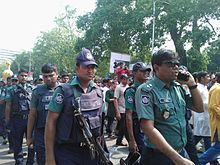 The most corrupt institution in the entire country.
Bangladesh is one of the most corrupt countries in the world and the problem seems to be getting worse and worse year by year. According to Transparency International, Bangladesh is the most corrupt country in South Asia.
The police are notorious for being highly corrupt and woefully ineffective, and the locals themselves are convinced that they are not to be trusted at all. In addition, most Bangladeshis consider the police to be the most corrupt institute in the entire country.
The police enjoy strong political patronage and are known to regularly abuse their powers; many public officials have been targeted and attacked by police forces.
Due to their low salaries, it's not uncommon for them to target people for bribes. In the event you are targeted by a corrupt official, stay calm, but be firm and polite. Don't make the encounter tense by losing your cool.
The Rapid Action Battalion (RAB), an elite unit of the police, is complicit in extrajudicial killings and forced disappearances, and in December 2021, the organisation and six former RAB officials were sanctioned by the United States.
Women travellersThe clothing of local women varies, according to religion and degree of religious conservatism, geographic region and socio-economic status. In general, as a female tourist, it is wisest to wear at least the salwar kameez, which is both easy to wear and relatively versatile and functional, while being generally culturally respectful. If you don't own or want to buy a salwar kameez you should use a large scarf to drape around your upper body. Bangladesh is a conservative society, and as a foreign woman you will attract incredible amounts of attention. Do not wear shorts, tank tops, or any revealing clothing showing much skin. However, most of Bangladesh is a relatively open-minded Muslim country and the youth in major cities are quite Westernized.
Forced marriagesForced marriage is a major problem in Bangladesh. The problem isn't just prevalent in Bangladesh though. It is also common among members of the Bangladeshi diaspora.
If you are a woman of Bangladeshi origin, there's a good chance you could be forced into marital arrangements against your will. Your family relatives may subject you to threats, intimidation, and violence, as a means to make you feel you have no choice but to accept the marriage.
Be very skeptical if your family asks you to come on a trip to Bangladesh. What may be a short trip could very easily turn into a long trip. Always ask yourself, "what's in it for them?". There may be an ulterior motive you don't know about.
If you are not in Bangladesh, call the police. In February 2013, family members of a Bangladeshi-origin woman in the UK were arrested for attacking her and attempting to force her to marry, simply because she was in a relationship with someone from a different religious faith.
If you are in Bangladesh, contact your embassy immediately for assistance. Always maintain possession of your passport and plane tickets; do not let your family members get their hands on them otherwise you may not be able to escape.
Natural disasters Flooding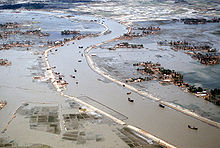 Expect things to get this nasty during heavy floods
Bangladesh is prone to flooding. This is largely in part due to the fact that the country is composed entirely out of silt, a material which is carried down by the rivers and tributaries comprising the Brahmaputra River Delta. As much as 30% of the country can be submerged during heavy floods.
Silt is responsible for Bangladesh's low-lying geography (a large portion of the country is covered by the Brahmaputra River Delta), and causes Bangladesh's rivers to overflow or burst their banks after heavy rainfall.
The summer monsoon in Bangladesh prevails from early June to mid-October. Try to schedule a trip before or after this period as the risk of flooding increases during that time.
As Bangladesh is still a developing nation, do not expect high-quality emergency services. Refer to the various tips found in the Flash floods article in the unlikely event the country is swamped with floods.
If you are in the country during the monsoon season, refer to this site: Flood Forecasting & Warning Centre. The website is maintained by the Bangladeshi government and you should refer to it from time to time so that you can stay safe in the event of massive flooding.
CyclonesBeing a low-lying country, Bangladesh is vulnerable to cyclones.
EarthquakesThe northern part of the country is vulnerable to seismic activity. Although it is unlikely that a massive earthquake would strike the country, the country's infrastructure is ill-equipped to deal with the aftershocks of a huge earthquake.