
Nepal
Context of Nepal
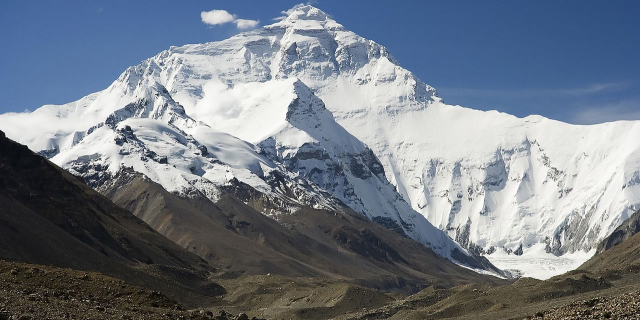
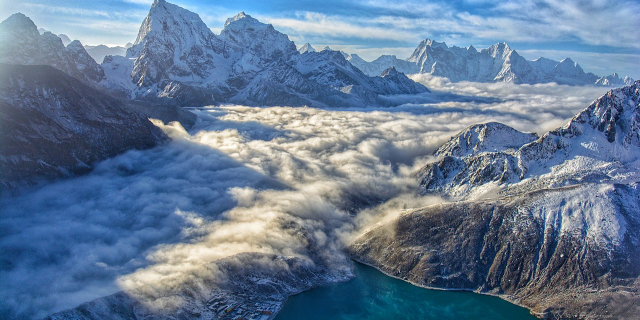
Nepal, officially the Federal Democratic Republic of Nepal, is a landlocked country in South Asia. It is mainly situated in the Himalayas, but also includes parts of the Indo-Gangetic Plain. It borders the Tibet Autonomous Region of China to the north, and India to the south, east, and west, while it is narrowly separated from Bangladesh by the Siliguri Corridor, and from Bhutan by the Indian state of Sikkim. Nepal has a diverse geography, including fertile plains, subalpine forested hills, and eight of the world's ten tallest mountains, including Mount Everest, the highest point on Earth. Kathmandu is the nation's capital and its largest city. Nepal is a multi-ethnic, multi-lingual, multi-religious, and multi-cultural state, with Nepali as the official language.
The name "Nepal" is first recorded in texts from the Vedic period of the Indian subcontinent, the era in ancient Nepal when Hinduism was founded, the predominant religio...Read more
Nepal, officially the Federal Democratic Republic of Nepal, is a landlocked country in South Asia. It is mainly situated in the Himalayas, but also includes parts of the Indo-Gangetic Plain. It borders the Tibet Autonomous Region of China to the north, and India to the south, east, and west, while it is narrowly separated from Bangladesh by the Siliguri Corridor, and from Bhutan by the Indian state of Sikkim. Nepal has a diverse geography, including fertile plains, subalpine forested hills, and eight of the world's ten tallest mountains, including Mount Everest, the highest point on Earth. Kathmandu is the nation's capital and its largest city. Nepal is a multi-ethnic, multi-lingual, multi-religious, and multi-cultural state, with Nepali as the official language.
The name "Nepal" is first recorded in texts from the Vedic period of the Indian subcontinent, the era in ancient Nepal when Hinduism was founded, the predominant religion of the country. In the middle of the first millennium BC, Gautama Buddha, the founder of Buddhism, was born in Lumbini in southern Nepal. Parts of northern Nepal were intertwined with the culture of Tibet. The centrally located Kathmandu Valley is intertwined with the culture of Indo-Aryans, and was the seat of the prosperous Newar confederacy known as Nepal Mandala. The Himalayan branch of the ancient Silk Road was dominated by the valley's traders. The cosmopolitan region developed distinct traditional art and architecture. By the 18th century, the Gorkha Kingdom achieved the unification of Nepal. The Shah dynasty established the Kingdom of Nepal and later formed an alliance with the British Empire, under its Rana dynasty of premiers. The country was never colonised but served as a buffer state between Imperial China and British India. Parliamentary democracy was introduced in 1951 but was twice suspended by Nepalese monarchs, in 1960 and 2005. The Nepalese Civil War in the 1990s and early 2000s resulted in the establishment of a secular republic in 2008, ending the world's last Hindu monarchy.
The Constitution of Nepal, adopted in 2015, affirms the country as a federal parliamentary republic divided into seven provinces. Nepal was admitted to the United Nations in 1955, and friendship treaties were signed with India in 1950 and China in 1960. Nepal hosts the permanent secretariat of the South Asian Association for Regional Cooperation (SAARC), of which it is a founding member. Nepal is also a member of the Non-Aligned Movement and the Bay of Bengal Initiative.
More about Nepal
- Currency Nepalese rupee
- Calling code +977
- Internet domain .np
- Mains voltage 230V/50Hz
- Democracy index 5.22
- Population 29164578
- Area 147181
- Driving side left
- Stay safe
Sometimes, there are strikes ("bandas") and demonstrations to contend with. Some businesses close, but many allowances are usually made for tourists, who are widely respected. Ask about strikes at your hotel or read the English language Nepali newspapers.
The Maoist insurgency ended in 2006 after they signed comprehensive peace agreement with the government. The government is in the hand of nepali congress as it wins the election of 2014. Due to the change in government the tourists are now much more safer than before. The trekking routes and other tourist destinations are safe for travel. If your country has an embassy or consulate in Nepal, let them know your whereabouts & plans, and at least listen seriously to any cautionary advice they offer.
Nepal's cities are safer than most, and even pickpockets are rare. Nevertheless, don't flash cash or make ostentatious displays of wealth.
Be cautious with the public transport. Roads are narrow, steep, winding & frequently crowded. Domestic flights with a private company are safer than the roads. Flying risks are greatest before & during the monsoon season when the mountains are usually clouded over.
If you should be seriously injured or sick where there are no roads or airports available, medical evacuation by helicopter may be your last best chance. If there is no firm guarantee that the bill will be paid, companies offering these services may demur, so look into insurance covering medical evacuations. You might ask if your embassy or consulate guarantees payment.