
Chimi Lhakhang
Chimi Lhakhang (Dzongkha: ཁྱི་མེད་ལྷ་ཁང), also known as Chime Lhakhang or Monastery or temple, is a Buddhist monastery in Punakha District, Bhutan. Located near Lobesa, it stands on a round hillock and was founded and built in 1499 by the Drukpa Kagyu lama Ngawang Chogyal, who was the 14th abbot of Ralung Monastery.
Due to its construction in the location where the demoness who turned into dog was subdued, the temple was named Chimi Lhakhang or Khimey Lhakhang. According to Lam Drukpa Kuenley's biography, the original name of the temple was Khibur/Chibur Lhakhang. Although Khi/Chi is a dog, bur refers to a stack or mound that was created after the tamed dog has been buried.
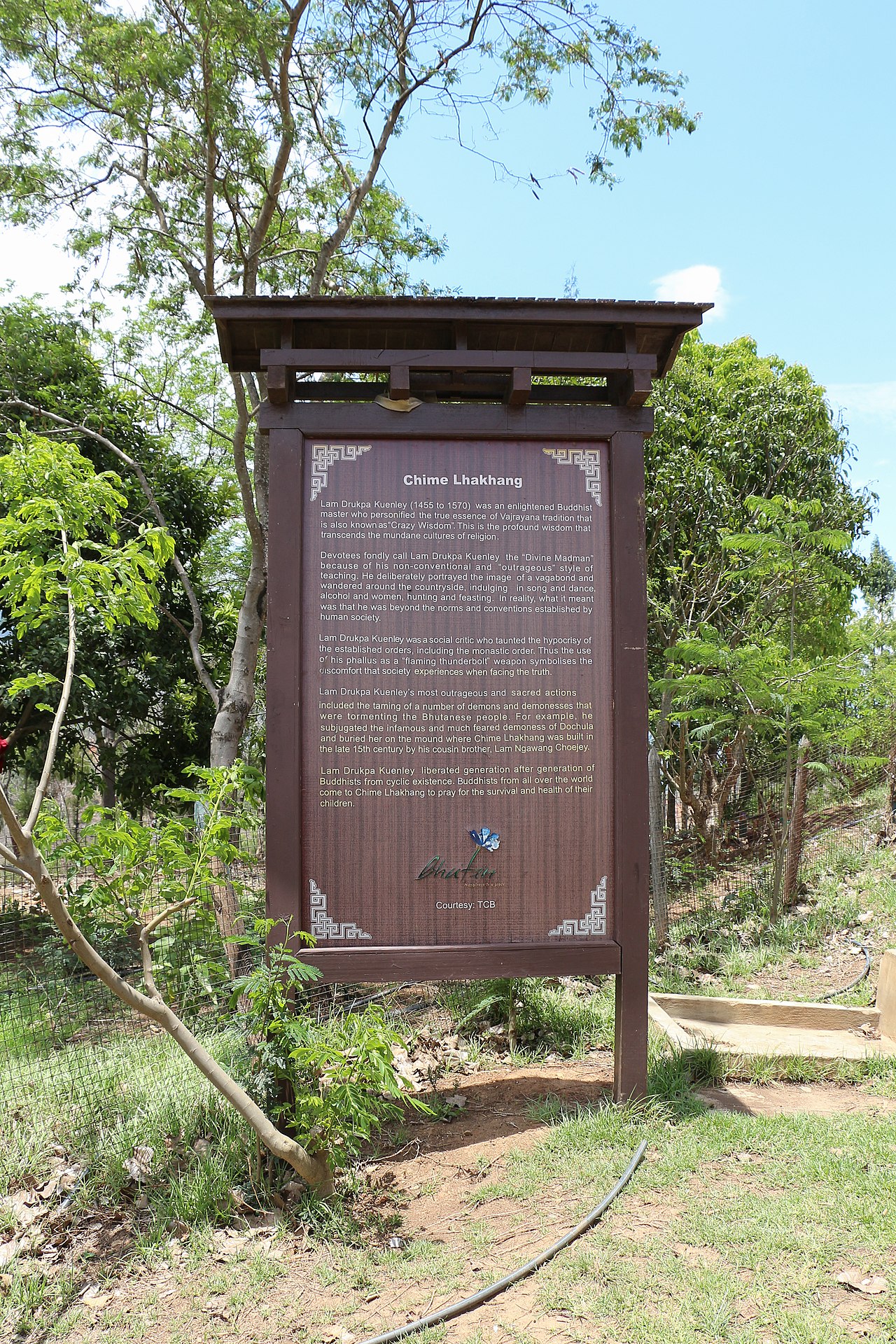
The site was blessed by Ngawang Chogyal's cousin, Drukpa Kunley (1455–1529), who also built a chorten on the site. In preparing and blessing the site it is said that Lama Kunley subdued a demon of Dochu La with his "magic thunderbolt of wisdom" and trapped it in...Read more
Chimi Lhakhang (Dzongkha: ཁྱི་མེད་ལྷ་ཁང), also known as Chime Lhakhang or Monastery or temple, is a Buddhist monastery in Punakha District, Bhutan. Located near Lobesa, it stands on a round hillock and was founded and built in 1499 by the Drukpa Kagyu lama Ngawang Chogyal, who was the 14th abbot of Ralung Monastery.
Due to its construction in the location where the demoness who turned into dog was subdued, the temple was named Chimi Lhakhang or Khimey Lhakhang. According to Lam Drukpa Kuenley's biography, the original name of the temple was Khibur/Chibur Lhakhang. Although Khi/Chi is a dog, bur refers to a stack or mound that was created after the tamed dog has been buried.
The site was blessed by Ngawang Chogyal's cousin, Drukpa Kunley (1455–1529), who also built a chorten on the site. In preparing and blessing the site it is said that Lama Kunley subdued a demon of Dochu La with his "magic thunderbolt of wisdom" and trapped it in a rock at the location close to where the chorten now stands. He was known as the "Mad Saint" or “Divine Madman” for his unorthodox ways of teaching Buddhism by singing, humour and outrageous behaviour, which amounted to being bizarre, shocking and with sexual overtones. He is also the saint who advocated the use of phallus symbols as paintings on walls and as flying carved wooden phalluses on house tops at four corners of the eaves. The monastery is the repository of the original wooden symbol of phallus that Kunley brought from Tibet. This wooden phallus is decorated with a silver handle and is used to bless people who visit the monastery on pilgrimage, particularly women seeking blessings to beget children. The tradition at the monastery is to strike pilgrims on the head with a 10-inch (25 cm) wooden phallus (erect penis). Traditionally symbols of an erect penis in Bhutan have been intended to drive away the evil eye and malicious gossip.




Add new comment