
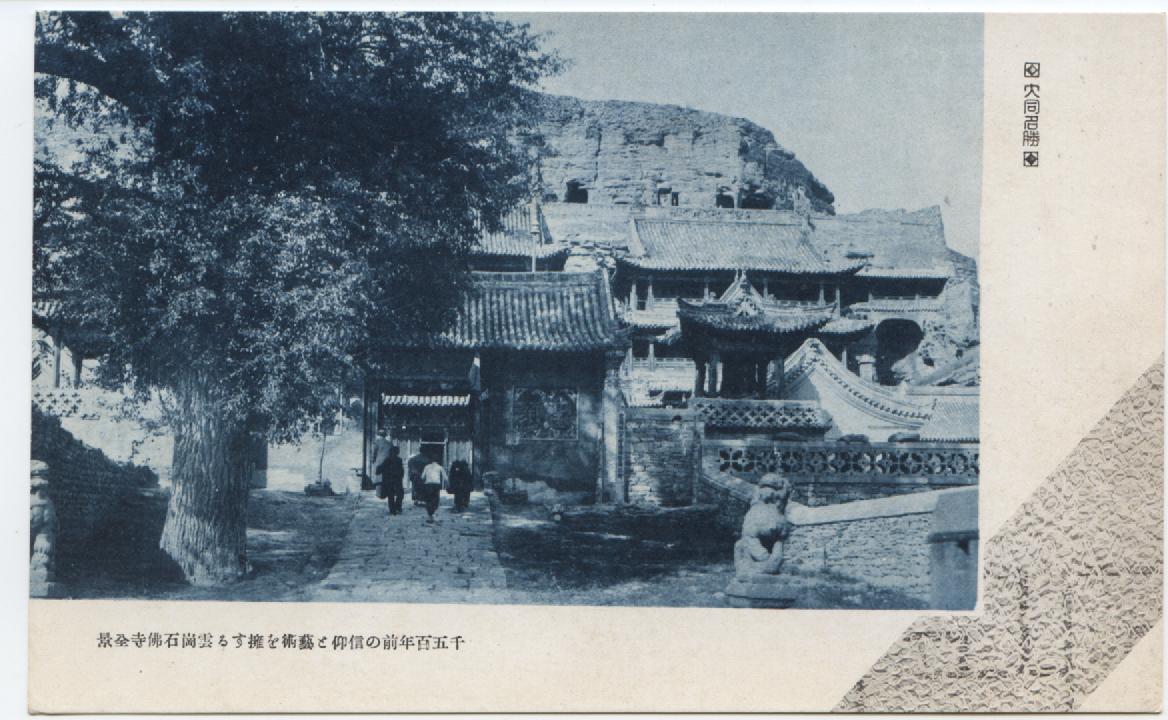
The Yungang Grottoes (Chinese: 云冈石窟; pinyin: Yúngāng shíkū), formerly the Wuzhoushan Grottoes (Chinese: 武州山 / 武周山; pinyin: Wǔzhōushān), are ancient Chinese Buddhist temple grottoes built during the Northern Wei dynasty near the city of Datong, then called Pingcheng, in the province of Shanxi. They are excellent examples of rock-cut architecture and one of the three most famous ancient Buddhist sculptural sites of China. The others are Longmen and Mogao.
The site is located about 16 km west of the city of Datong, in the valley of the Shi Li river at the base of the Wuzhou Shan mountains. They are an outstanding example of the Chinese stone carvings from the 5th and 6th centuries. There are 53 major caves, along with 51,000 niches housing the same number of Buddha statues. Additionally, there are around 1,100 minor caves. A Ming dynasty-era...Read more
The Yungang Grottoes (Chinese: 云冈石窟; pinyin: Yúngāng shíkū), formerly the Wuzhoushan Grottoes (Chinese: 武州山 / 武周山; pinyin: Wǔzhōushān), are ancient Chinese Buddhist temple grottoes built during the Northern Wei dynasty near the city of Datong, then called Pingcheng, in the province of Shanxi. They are excellent examples of rock-cut architecture and one of the three most famous ancient Buddhist sculptural sites of China. The others are Longmen and Mogao.
The site is located about 16 km west of the city of Datong, in the valley of the Shi Li river at the base of the Wuzhou Shan mountains. They are an outstanding example of the Chinese stone carvings from the 5th and 6th centuries. There are 53 major caves, along with 51,000 niches housing the same number of Buddha statues. Additionally, there are around 1,100 minor caves. A Ming dynasty-era fort is still located on top of the cliff housing the Yungang Grottoes.
The grottoes were excavated in the south face of a sandstone cliff about 2,600 feet long and 30 to 60 feet high. In 2001, the Yungang Grottoes were made a UNESCO World Heritage Site. The Yungang Grottoes are considered by UNESCO to be a "masterpiece of early Chinese Buddhist cave art... [and] ...represent the successful fusion of Buddhist religious symbolic art from south and central Asia with Chinese cultural traditions, starting in the 5th century CE under Imperial auspices." It is classified as a AAAAA scenic area by the China National Tourism Administration.




Add new comment