
Port-Revel
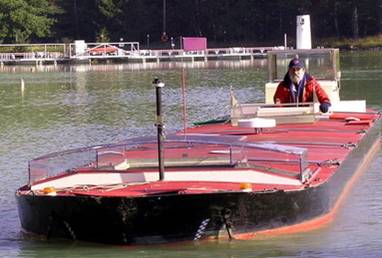
( Port Revel )The Port Revel Shiphandling Training Centre is a French maritime pilotage school that trains pilots, masters, and officers on large ships like supertankers, container ships, LNG carriers and cruise ships . The facility uses manned models at a 1:25 scale on a man-made lake designed to simulate natural conditions including harbours, canals, and open seas. It was the first such facility in the world. The Centre was created in 1967 near Grenoble, France, by Laboratoire Dauphinois d'Hydraulique (now Artelia).
The courses are given by former maritime pilots. Since 1967, the Centre has trained over 6 500 maritime pilots, captains and officers from all over the world. French, European, Australian, Brazilian and North American pilots make up 90% of the Centre's students.
The manned model training regime is now recommended by the International Maritime Organization under Resolution A 960 (23) of December 2005.
The facility was written about by John McPhee in an Oc...Read more
The Port Revel Shiphandling Training Centre is a French maritime pilotage school that trains pilots, masters, and officers on large ships like supertankers, container ships, LNG carriers and cruise ships . The facility uses manned models at a 1:25 scale on a man-made lake designed to simulate natural conditions including harbours, canals, and open seas. It was the first such facility in the world. The Centre was created in 1967 near Grenoble, France, by Laboratoire Dauphinois d'Hydraulique (now Artelia).
The courses are given by former maritime pilots. Since 1967, the Centre has trained over 6 500 maritime pilots, captains and officers from all over the world. French, European, Australian, Brazilian and North American pilots make up 90% of the Centre's students.
The manned model training regime is now recommended by the International Maritime Organization under Resolution A 960 (23) of December 2005.
The facility was written about by John McPhee in an October, 1998 article for The Atlantic Monthly, later republished as Chapter Two in his book Uncommon Carriers (2006).


![[node:title]](/sites/default/files/styles/640x320/public/default_images/default_0.JPG.webp?itok=aqV9zhFR)














Add new comment