
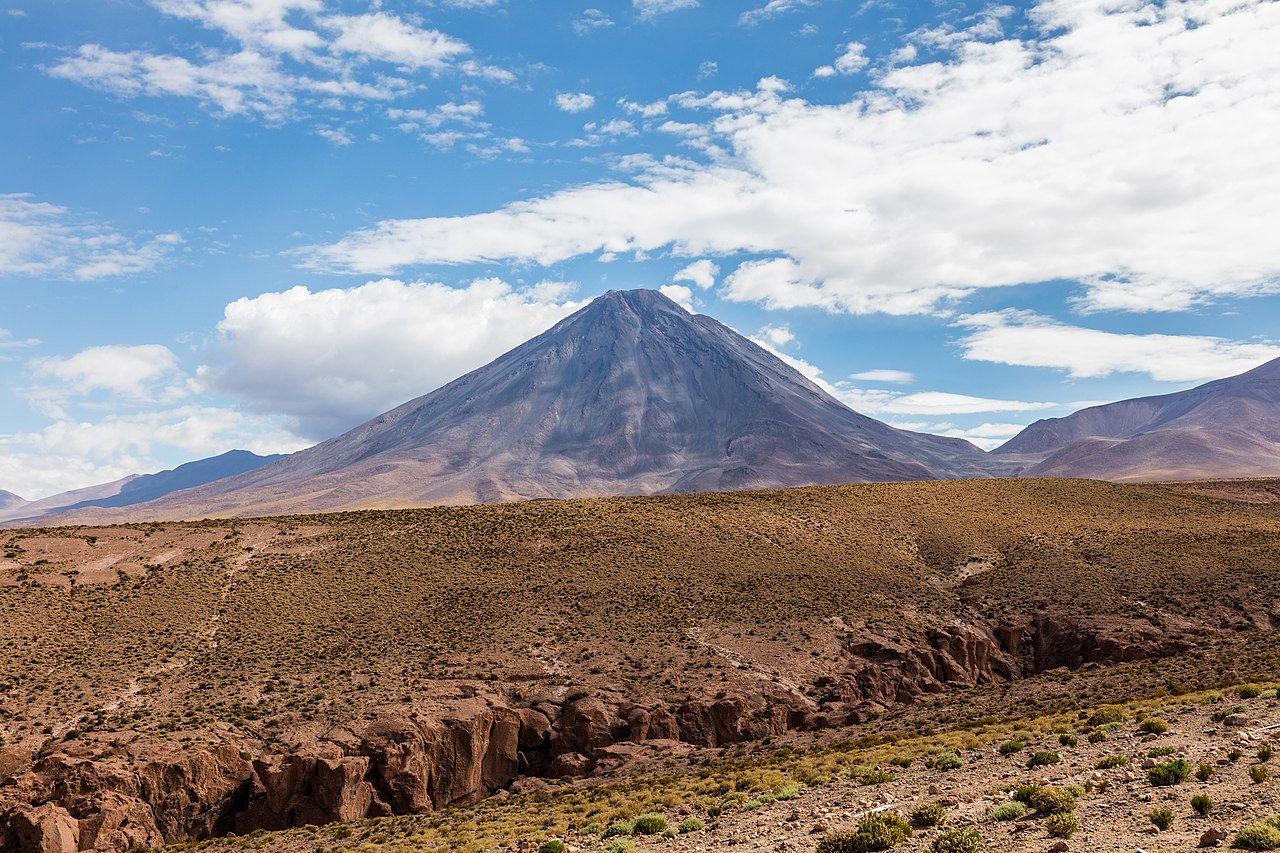
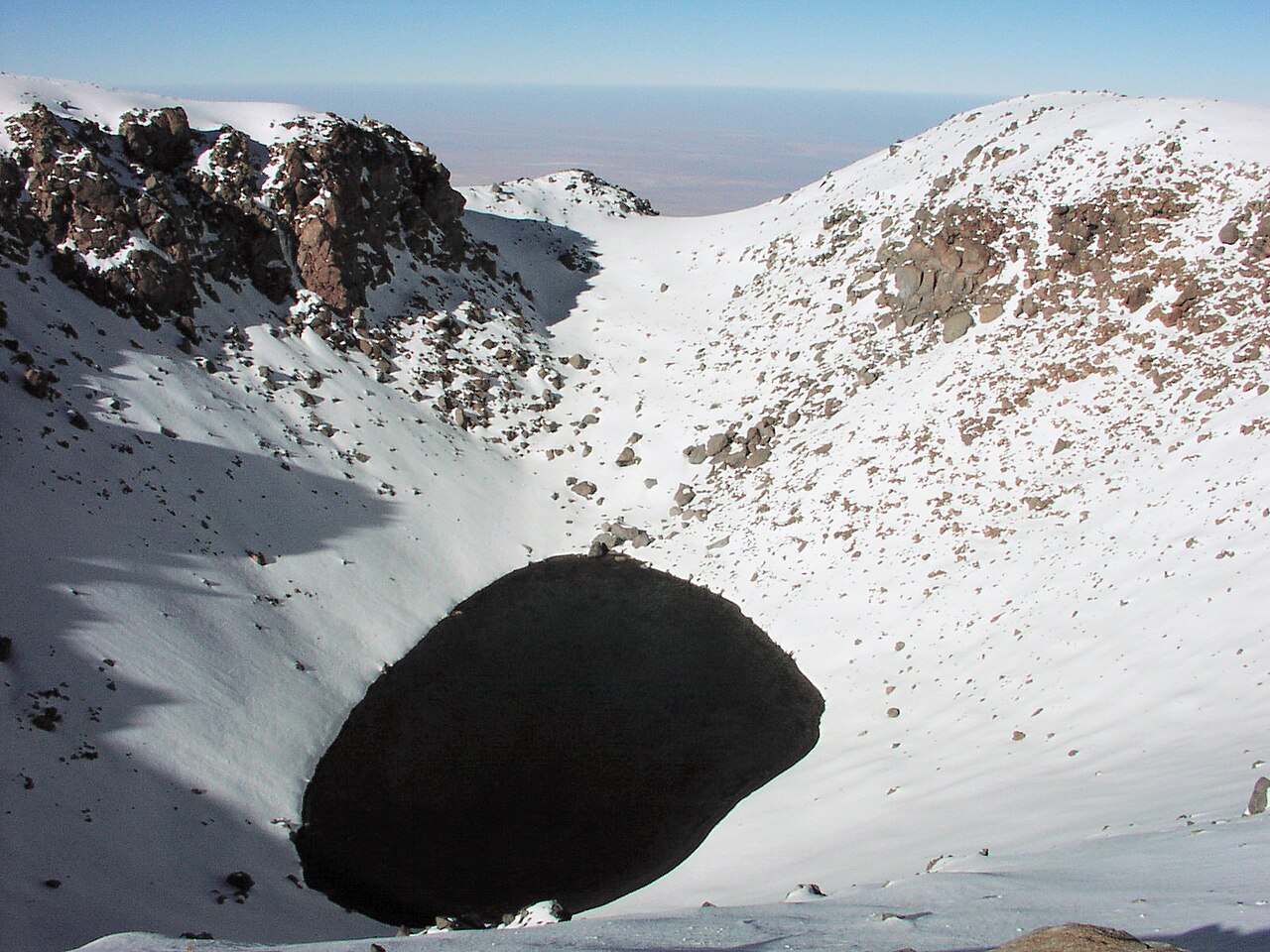
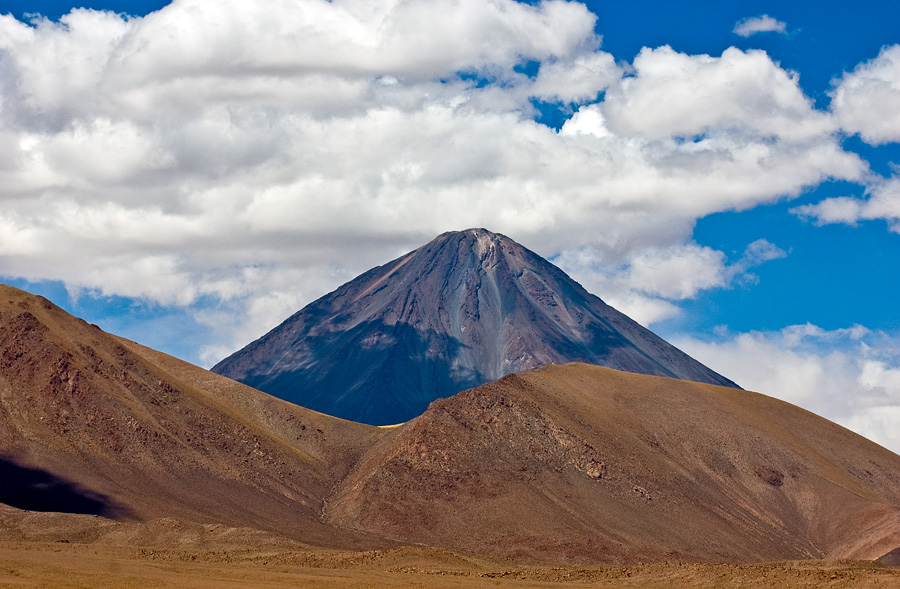
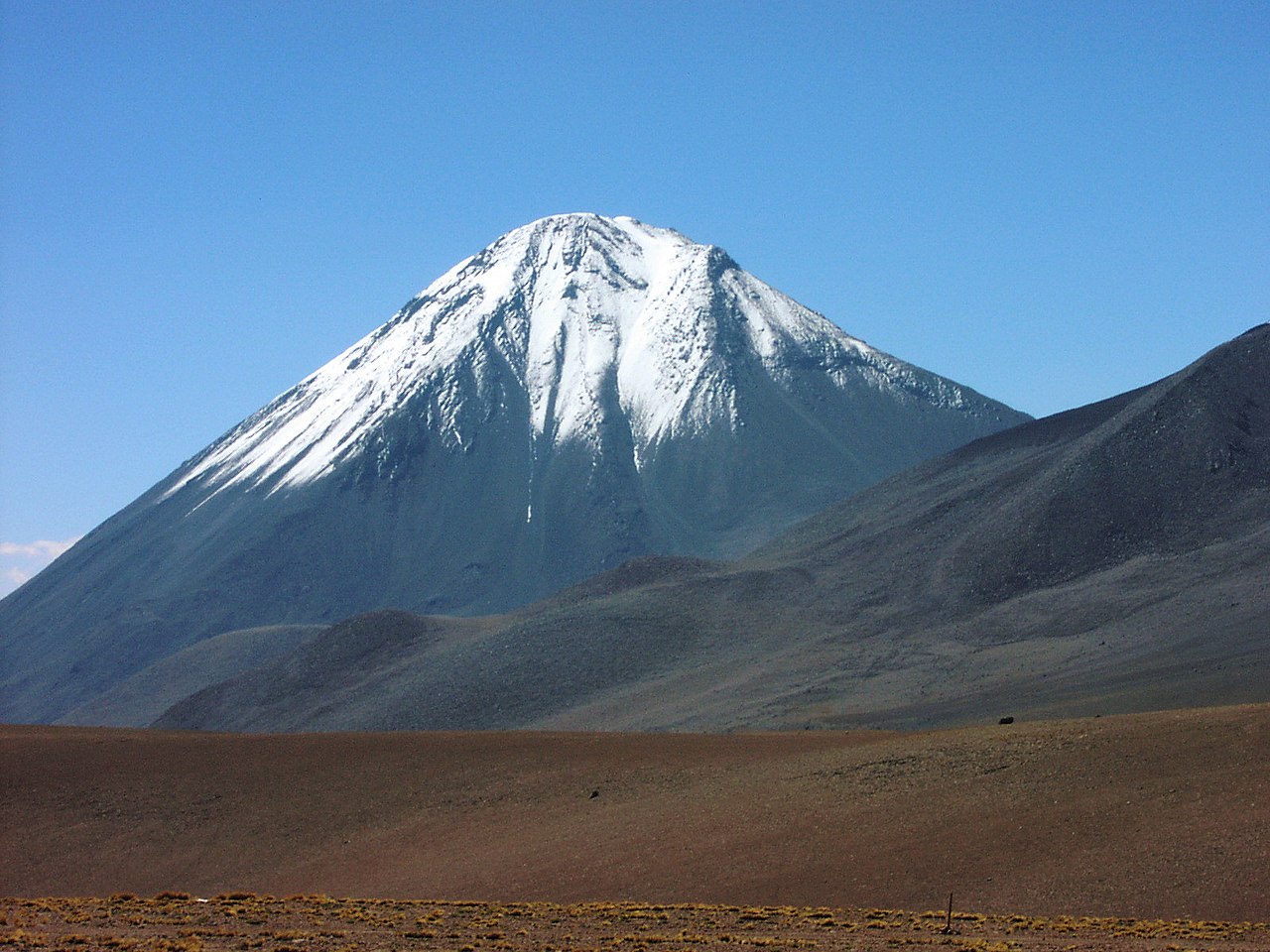
Licancabur (Spanish pronunciation: [likaŋkaˈβuɾ]) is a prominent, 5,916-metre-high (19,409 ft) stratovolcano on the Bolivia–Chile border in the Central Volcanic Zone of the Andes. It is capped by a 400–500-metre (1,300–1,600 ft) wide summit crater which contains Licancabur Lake, a crater lake that is among the highest lakes in the world. There are no glaciers owing to the arid climate. Numerous plants and animal species live on the mountain. The volcanoes Sairecabur and Juriques are north and east of Licancabur, respectively.
Licancabur formed on top of ignimbrites produced by other volcanoes and it has been active during the Holocene. Three stages of lava flows emanated from the edifice and have a young appearance. Although no historical eruptions of the volcano are known, lava flows extending into Laguna Verde have been dated to 13,240 ± 100 before present and there may be residual heat in...Read more
Licancabur (Spanish pronunciation: [likaŋkaˈβuɾ]) is a prominent, 5,916-metre-high (19,409 ft) stratovolcano on the Bolivia–Chile border in the Central Volcanic Zone of the Andes. It is capped by a 400–500-metre (1,300–1,600 ft) wide summit crater which contains Licancabur Lake, a crater lake that is among the highest lakes in the world. There are no glaciers owing to the arid climate. Numerous plants and animal species live on the mountain. The volcanoes Sairecabur and Juriques are north and east of Licancabur, respectively.
Licancabur formed on top of ignimbrites produced by other volcanoes and it has been active during the Holocene. Three stages of lava flows emanated from the edifice and have a young appearance. Although no historical eruptions of the volcano are known, lava flows extending into Laguna Verde have been dated to 13,240 ± 100 before present and there may be residual heat in the mountain. The volcano has primarily erupted andesite, with small amounts of dacite and basaltic andesite.
Several archaeological sites have been found on the mountain, both on its summit and northeastern foot. They are thought to have been constructed by the Inca or Atacama people for religious and cultural ceremonies and are among the most important in the region. The mountain is the subject of myths in which it is viewed as the husband of another mountain, a hiding place used by the Inca, or the burial of an Inca king.








Add new comment