
Quebrada de Las Flechas
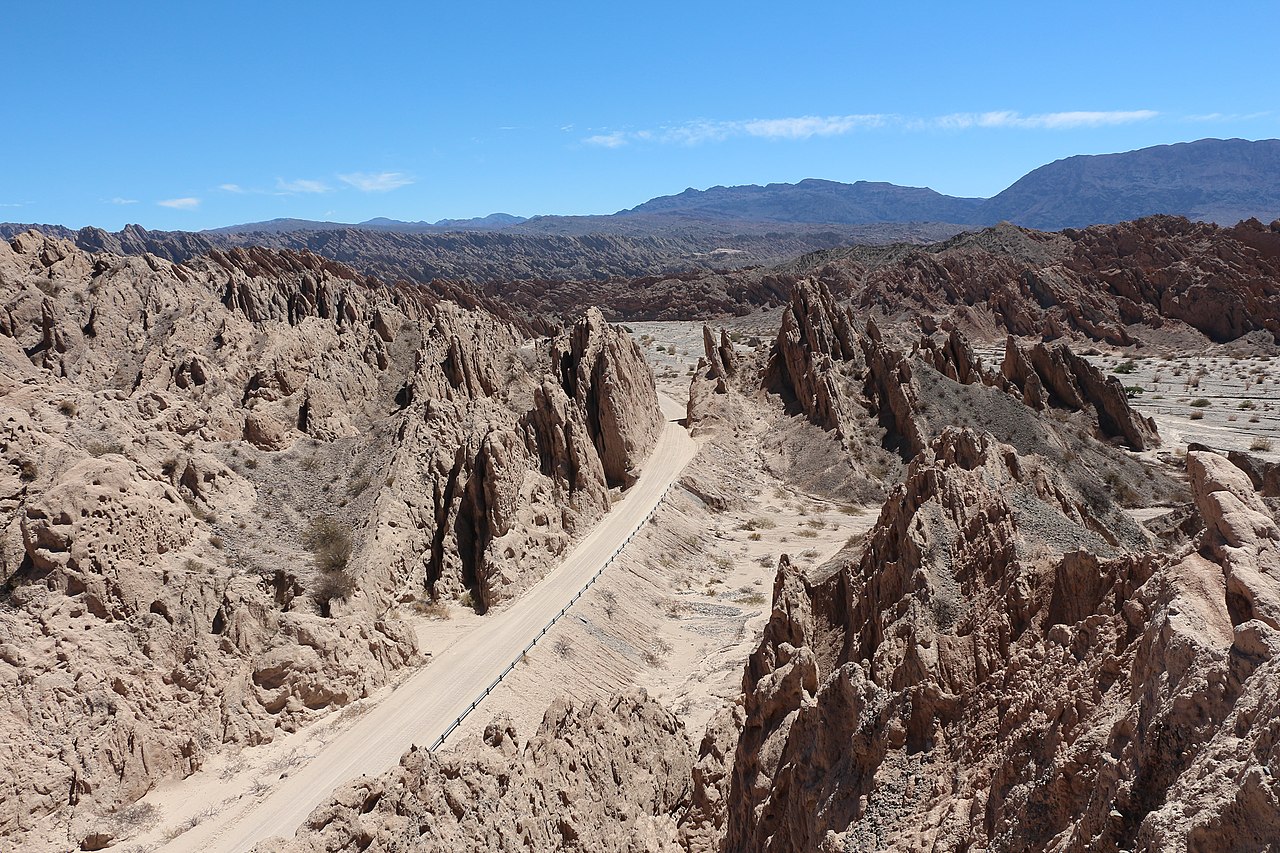
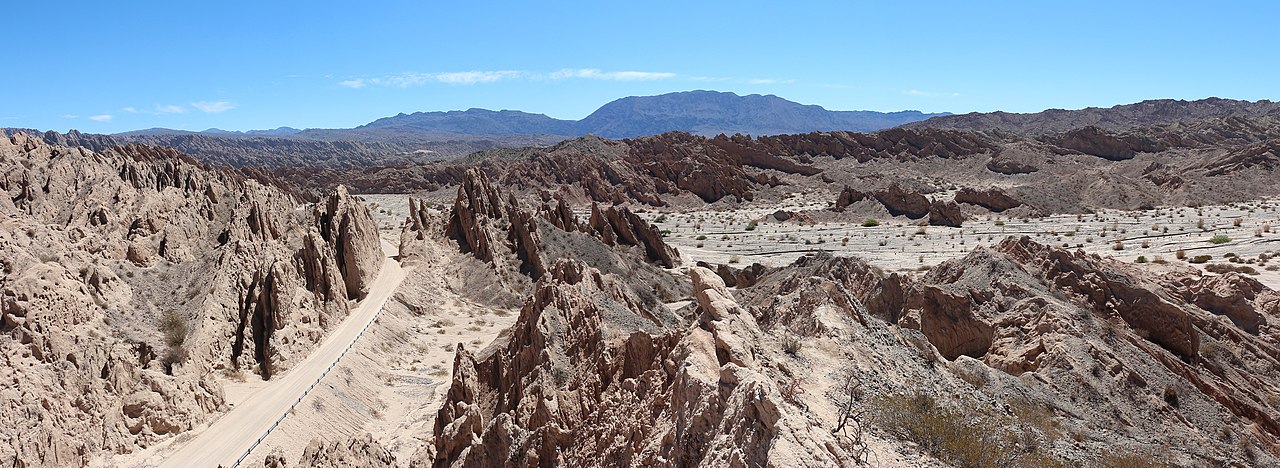
The Quebrada de Las Flechas is a geographical feature (specifically a ravine) located at 4,380 kilometres (2,720 mi) of National Route 40 (the section that connects the towns of Cafayate and Cachi) in the San Carlos Department of the province of Salta, in the north of the Argentine Republic, extending for 20 kilometres (12 mi) within the Calchaquí Valleys, from Angastaco to the Calchaquí River. In 1995, the Salta Legislature incorporated it as one of its symbols.
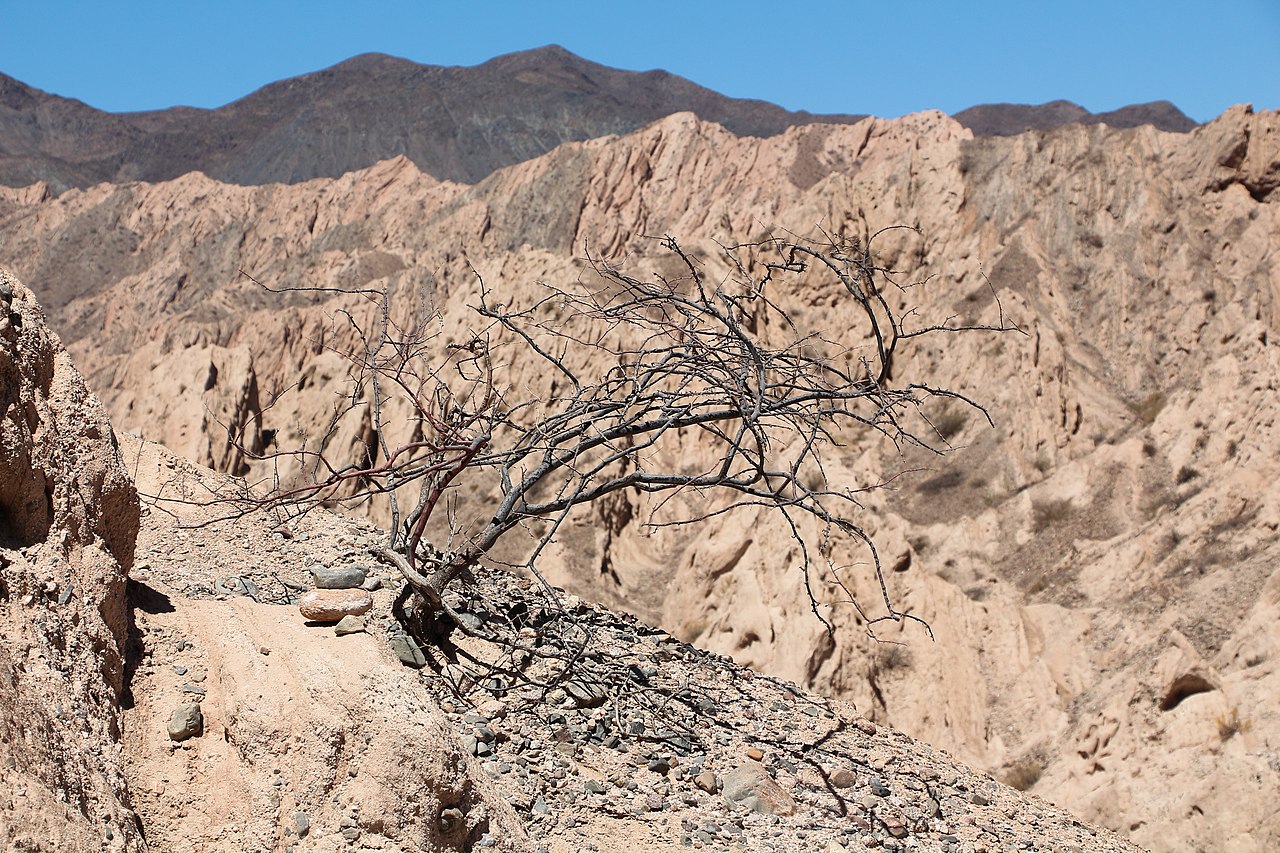
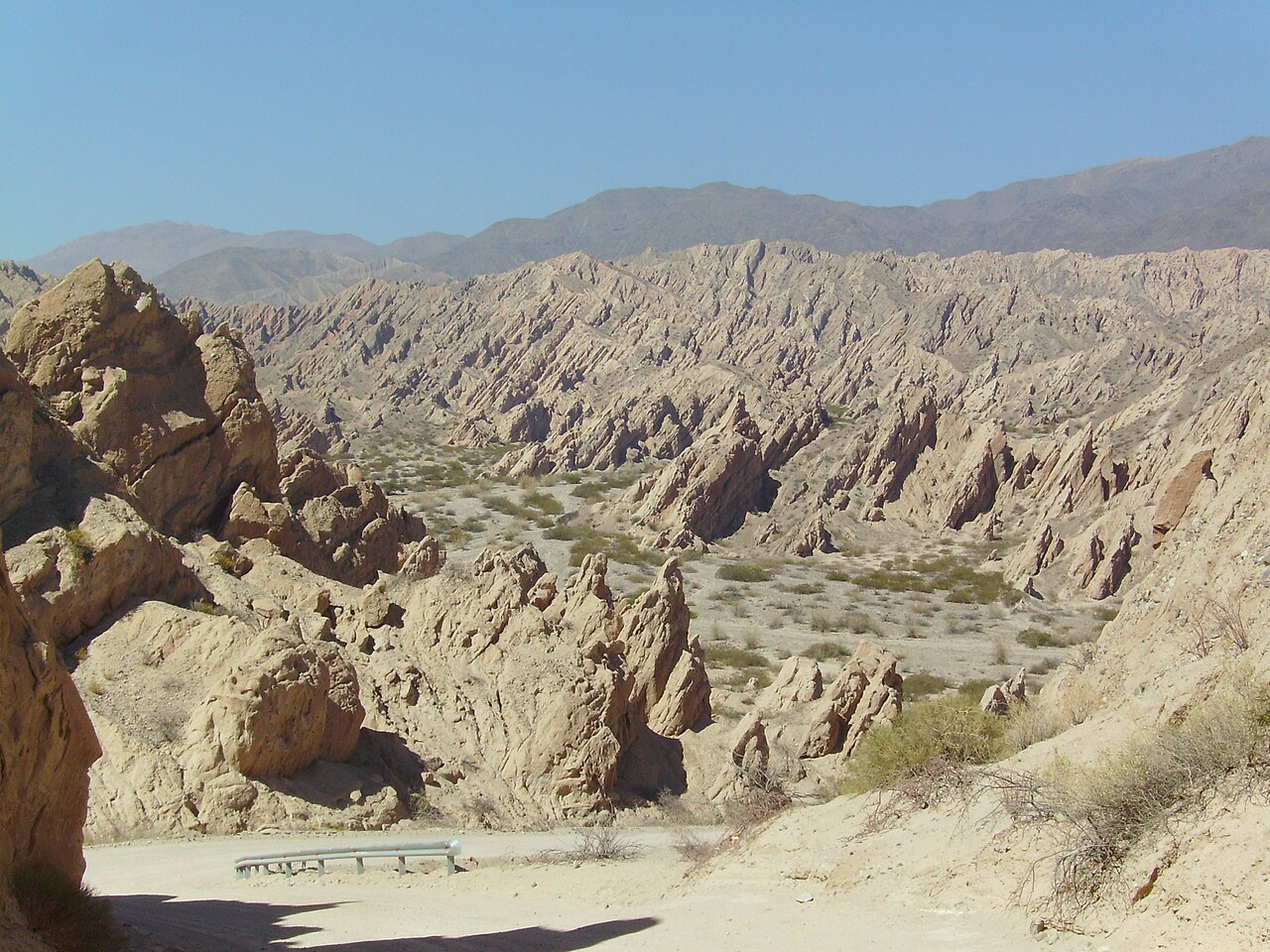
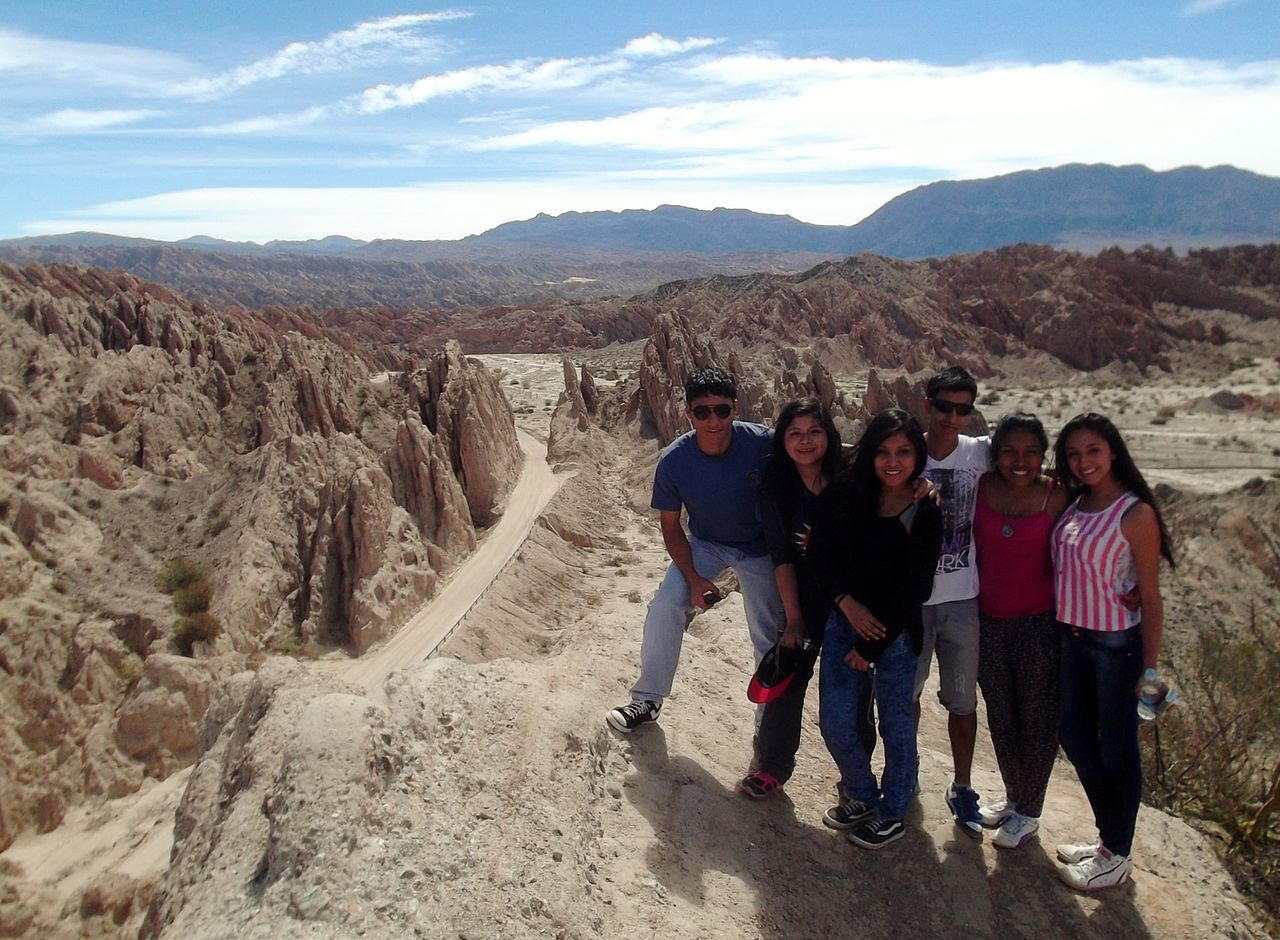
Approximately 260 kilometres (160 mi) from the city of Salta (via Cafayate), these are inclined pointed rock formations that form narrow gorges with 20 metres (66 ft) high walls, making them one of the most attractive tourist spots on National Route 40.
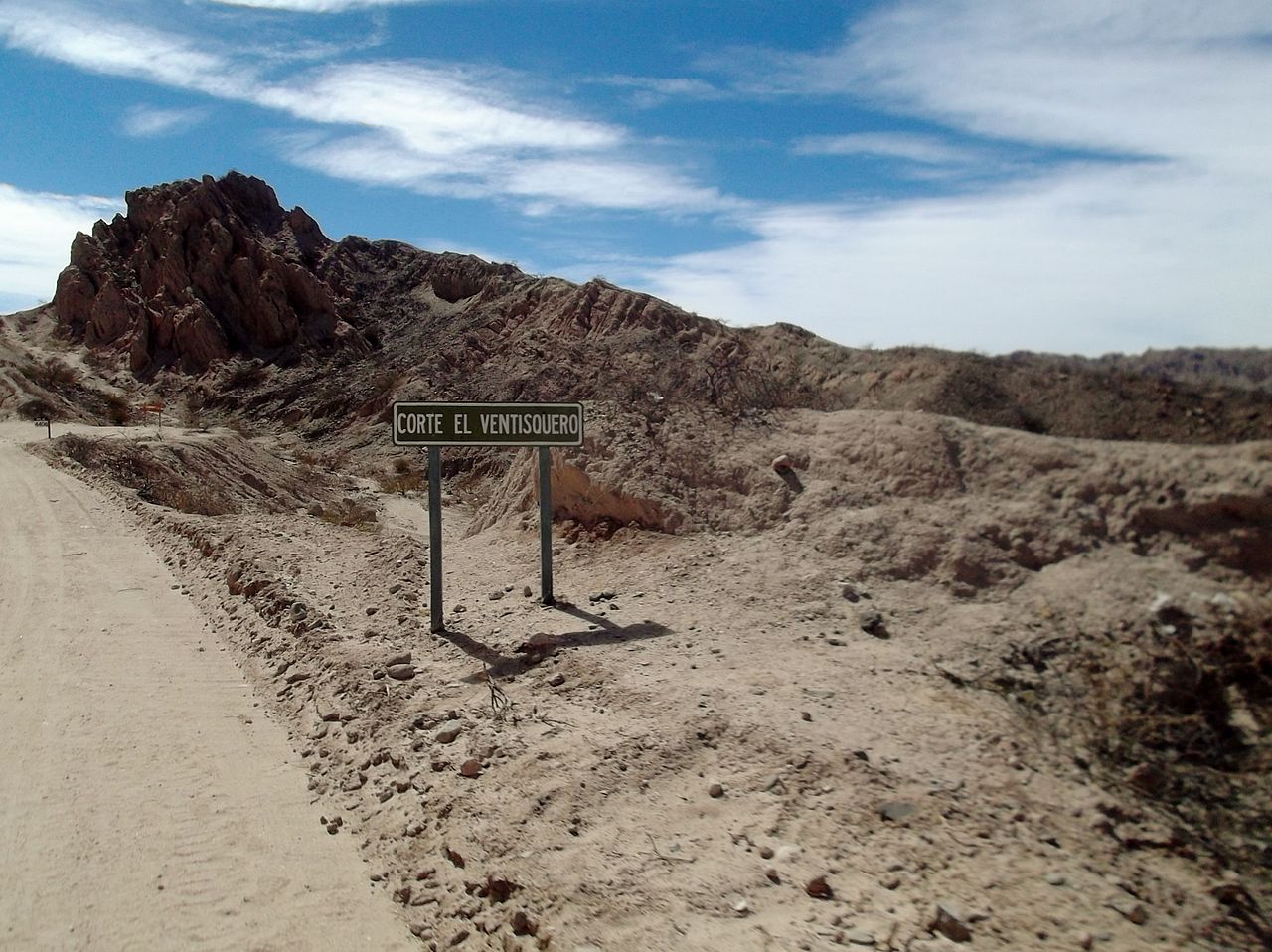
While crossing the formations, the "Paso del Ventisquero" and especially the "Paso de la Flecha" stand out, which resembles a petrified glacier with sharp points, which was declared a natural monument of Angastaco by means of provincial law no. 6808 sanc...Read more
The Quebrada de Las Flechas is a geographical feature (specifically a ravine) located at 4,380 kilometres (2,720 mi) of National Route 40 (the section that connects the towns of Cafayate and Cachi) in the San Carlos Department of the province of Salta, in the north of the Argentine Republic, extending for 20 kilometres (12 mi) within the Calchaquí Valleys, from Angastaco to the Calchaquí River. In 1995, the Salta Legislature incorporated it as one of its symbols.
Approximately 260 kilometres (160 mi) from the city of Salta (via Cafayate), these are inclined pointed rock formations that form narrow gorges with 20 metres (66 ft) high walls, making them one of the most attractive tourist spots on National Route 40.
While crossing the formations, the "Paso del Ventisquero" and especially the "Paso de la Flecha" stand out, which resembles a petrified glacier with sharp points, which was declared a natural monument of Angastaco by means of provincial law no. 6808 sanctioned on November 9, 1995.
Along the route, located at 4,420 kilometres (2,750 mi) of Route 40, is the oldest Jesuit church in the entire Calchaquí Valley, dating back to 1780. It was restored in 1969 by the current owners of the place (Finca El Carmen); made of adobe and a cane roof, with two colourful altars, the church seems to hang from a ravine, looking out over the valley in all its extension. From the place, and crossing the river, one can enter among ancient rocks where the archaeological remains such as funerary urns and vessels from the Santamariana culture (or Santa María culture), which inhabited these lands before the arrival of the Spanish.
The ravine is included in a large region included among the important areas for bird conservation in Argentina.










Add new comment