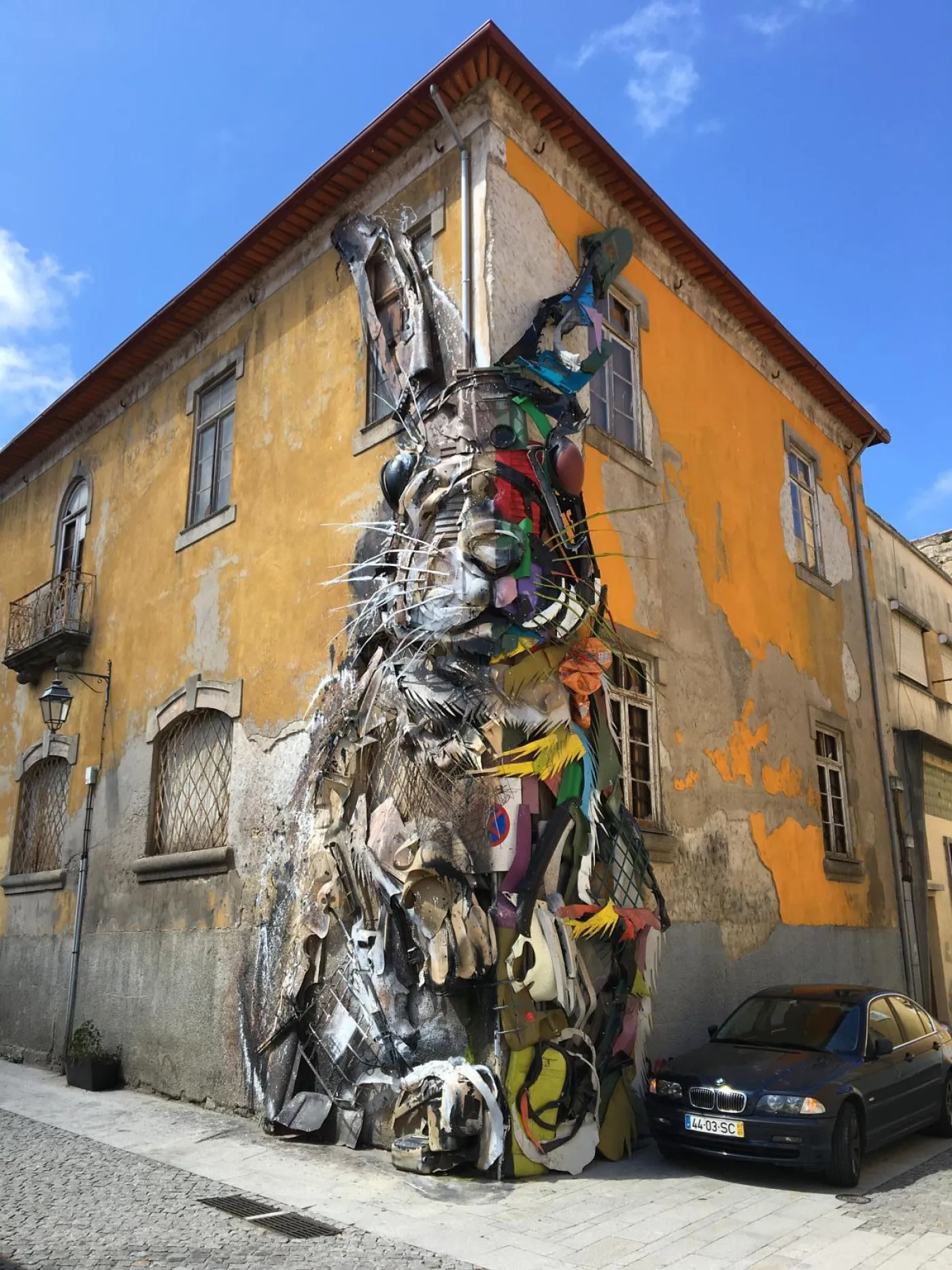

Portugal
Context of Portugal
Portugal, officially the Portuguese Republic, is a country in the Iberian Peninsula in Southwestern Europe. Featuring the westernmost point in continental Europe, Portugal borders Spain to its north and east, with which it shares the longest uninterrupted border in the European Union; to the south and the west is the North Atlantic Ocean; and to the west and southwest lie the Macaronesian archipelagos of the Azores and Madeira, which are the two autonomous regions of Portugal. Lisbon is the capital and largest city, followed by Porto, which is the only other metropolitan area.
The western Iberian Peninsula has been continuously inhabited since prehistoric times, with the earliest signs of settlement dating to 5500 BC. Celtic and Iberian peoples arrived in the first millennium BC. The region came under Roman control in the second century BC. A succession of Germanic peoples and the Alans ruled from the fifth to eighth centuries AD...Read more
Portugal, officially the Portuguese Republic, is a country in the Iberian Peninsula in Southwestern Europe. Featuring the westernmost point in continental Europe, Portugal borders Spain to its north and east, with which it shares the longest uninterrupted border in the European Union; to the south and the west is the North Atlantic Ocean; and to the west and southwest lie the Macaronesian archipelagos of the Azores and Madeira, which are the two autonomous regions of Portugal. Lisbon is the capital and largest city, followed by Porto, which is the only other metropolitan area.
The western Iberian Peninsula has been continuously inhabited since prehistoric times, with the earliest signs of settlement dating to 5500 BC. Celtic and Iberian peoples arrived in the first millennium BC. The region came under Roman control in the second century BC. A succession of Germanic peoples and the Alans ruled from the fifth to eighth centuries AD. Muslims invaded mainland Portugal in the eighth century, but were gradually expelled by the Christian Reconquista, culminating with the capture of the Algarve between 1238 and 1249. Modern Portugal began taking shape during this period, initially as a county of the Christian Kingdom of León in 868, and formally as a sovereign kingdom with the Manifestis Probatum in 1179.
As one of the earliest participants in the Age of Discovery, Portugal made several advancements in nautical science, including devising the volta do mar navigational technique, which enabled safe roundtrip voyages in open sea — a major turning point in world history. Portugal settled Madeira and the Azores, establishing an influential maritime empire that extended mostly along the South Atlantic and Indian Ocean coasts. The Portuguese were among the first Europeans to explore and discover new territories and sea routes, establishing a global commercial network of settlements, colonies, and trading posts. A dynastic crisis in the early 1580s resulted in the Iberian Union (1580–1640), which unified Portugal under Spanish rule, marking its gradual decline as a global power. Portuguese sovereignty was regained in 1640 and was followed by a costly and protracted war lasting until 1688, while the 1755 Lisbon earthquake destroyed the city and further damaged the empire's economy.
The Napoleonic Wars drove the relocation of the court to Brazil in 1807, leading to its elevation from colony to kingdom which culminated with its independence in 1822, triggering a civil war (1828–1834) between supporters for a constitutional monarchy and absolutist monarchists. The monarchy endured until the 5 October 1910 revolution, which replaced it with the First Republic. A phase of unrest ultimately led to its replacement with the authoritarian Ditadura Nacional and then turned into the Estado Novo. Democracy was restored in 1974 following the Carnation Revolution, which brought an end to the Portuguese Colonial War and allowed the last of Portugal's African territories to achieve independence.
Portugal's imperial history has left a vast cultural legacy, with around 300 million Portuguese speakers around the world. Today, it is a developed country with an advanced economy relying chiefly upon services, industry, and tourism. Portugal, a member of the United Nations, the European Union, the Schengen Area, and the Council of Europe, was one of the founding members of NATO, the eurozone, the OECD, and the Community of Portuguese Language Countries.
More about Portugal
- Currency Euro
- Native name Portugal
- Calling code +351
- Internet domain .pt
- Mains voltage 230V/50Hz
- Democracy index 7.9
- Population 8857716
- Area 92225
- Driving side right
- Stay safe
The emergency telephone number for police, fire, and medical assistance is 112. This is the national call centre dial in number for any emergency or to report an accident, fire etc etc. Ensure you have this number registered in your means of communication or noted down somewhere in case it becomes necessary to notify authorities or emergency response entities.
Portugal is a relatively safe country to visit, but some basic common sense will go a long way. There are no internal conflicts, no terrorism-related danger and violent crime is not a serious problem, as it is generally confined to particular neighbourhoods and is rarely a random crime.
There are three main police branches. In major urban areas the PSP or Policía de Segurança Pública (Public Security Police) are in charge of law enforcement. Outside major urban centres and in rural areas, the GNR or Guarda Nacional Republicana (National Republican Guards) take over the law enforcement.
Both the PSP and GNR are also responsible for road traffic supervision and enforcement within their respective jurisdictions. The third branch is the PJ or Policía Judiciária (Judicial Police). These are a crime investigation branch composed of plain clothes detectives. In general, the Portuguese police officers are well trained, educated and polite. Many that are posted in tourist popular areas, have basic communication skills in foreign languages and some are fluent speakers of French, German, English and Spanish, therefore, easy to approach if the need arises.
When visiting Portugal, there are however, some areas of Lisbon and Porto that you might want to avoid, like in any big city, especially at night. Also, you might want to have in mind that pickpockets do tend to target tourists and tourist-frequented areas more frequently. During the holiday season, many of the pickpocketers are themselves foreigners posing as regular tourists and act and look as such. Wear a money belt or keep your documents and money in an inside pocket. Metro and large rail stations, shopping areas, queues and crowded buses are the most usual places for pickpockets. Many are under 18 and take advantage of the non-harsh laws on minors. If you try to run them down, a fight may be necessary to get your items back.
On the subway or on trains try to sit with other people and avoid empty carriages. Non-violent pickpocket is the most common crime so always watch any bags (purses, luggage, shopping bags, etc.) you may have with you. A voice message reminding that is played in most of the metro and train stations.
...Read moreStay safeRead lessThe emergency telephone number for police, fire, and medical assistance is 112. This is the national call centre dial in number for any emergency or to report an accident, fire etc etc. Ensure you have this number registered in your means of communication or noted down somewhere in case it becomes necessary to notify authorities or emergency response entities.
Portugal is a relatively safe country to visit, but some basic common sense will go a long way. There are no internal conflicts, no terrorism-related danger and violent crime is not a serious problem, as it is generally confined to particular neighbourhoods and is rarely a random crime.
There are three main police branches. In major urban areas the PSP or Policía de Segurança Pública (Public Security Police) are in charge of law enforcement. Outside major urban centres and in rural areas, the GNR or Guarda Nacional Republicana (National Republican Guards) take over the law enforcement.
Both the PSP and GNR are also responsible for road traffic supervision and enforcement within their respective jurisdictions. The third branch is the PJ or Policía Judiciária (Judicial Police). These are a crime investigation branch composed of plain clothes detectives. In general, the Portuguese police officers are well trained, educated and polite. Many that are posted in tourist popular areas, have basic communication skills in foreign languages and some are fluent speakers of French, German, English and Spanish, therefore, easy to approach if the need arises.
When visiting Portugal, there are however, some areas of Lisbon and Porto that you might want to avoid, like in any big city, especially at night. Also, you might want to have in mind that pickpockets do tend to target tourists and tourist-frequented areas more frequently. During the holiday season, many of the pickpocketers are themselves foreigners posing as regular tourists and act and look as such. Wear a money belt or keep your documents and money in an inside pocket. Metro and large rail stations, shopping areas, queues and crowded buses are the most usual places for pickpockets. Many are under 18 and take advantage of the non-harsh laws on minors. If you try to run them down, a fight may be necessary to get your items back.
On the subway or on trains try to sit with other people and avoid empty carriages. Non-violent pickpocket is the most common crime so always watch any bags (purses, luggage, shopping bags, etc.) you may have with you. A voice message reminding that is played in most of the metro and train stations.
Illicit drug useOn July 1, 2001, a nationwide law in Portugal took effect that decriminalised the recreational use of drugs. Drug possession for personal use and drug usage (up to 2.5 grams of cannabis for instance) itself are still legally prohibited, but violations of those prohibitions are deemed to be exclusively administrative violations and are removed completely from the criminal realm. Drug trafficking and driving under the influence of drugs is still illegal.