
Tibet
Context of Tibet
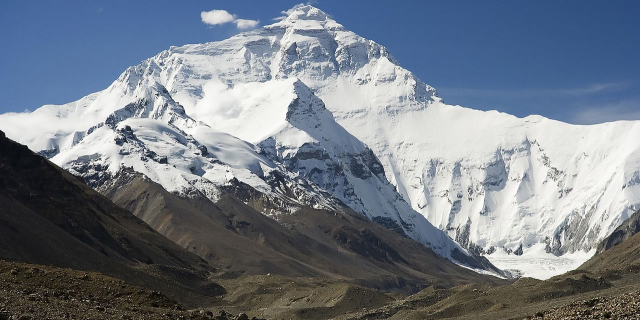
Tibet ( ; Tibetan: བོད, Lhasa dialect: [pʰøːʔ˨˧˩] Böd; Chinese: 西藏; pinyin: Xizhang), or Greater Tibet, is a region in the western part of East Asia, covering much of the Tibetan Plateau and spanning about 470,000 sq mi (1,200,000 km2). It is the homeland of the Tibetan people. Also resident on the plateau are other ethnic groups such as Mongols, Monpa, Tamang, Qiang, Sherpa, Lhoba, and since the 20th century Han Chinese and Hui. Tibet is the highest region on Earth, with an average elevation of 4,380 m (14,000 ft). Located in the Himalayas, the highest elevation in Tibet is Mount Everest, Earth's highest mountain, rising 8,848 m (29,000 ft) above sea level.
The Tibetan Empire emerged in the 7th century. At its height in the 9th century, the Tibetan Empire extended f...Read more
Tibet ( ; Tibetan: བོད, Lhasa dialect: [pʰøːʔ˨˧˩] Böd; Chinese: 西藏; pinyin: Xizhang), or Greater Tibet, is a region in the western part of East Asia, covering much of the Tibetan Plateau and spanning about 470,000 sq mi (1,200,000 km2). It is the homeland of the Tibetan people. Also resident on the plateau are other ethnic groups such as Mongols, Monpa, Tamang, Qiang, Sherpa, Lhoba, and since the 20th century Han Chinese and Hui. Tibet is the highest region on Earth, with an average elevation of 4,380 m (14,000 ft). Located in the Himalayas, the highest elevation in Tibet is Mount Everest, Earth's highest mountain, rising 8,848 m (29,000 ft) above sea level.
The Tibetan Empire emerged in the 7th century. At its height in the 9th century, the Tibetan Empire extended far beyond the Tibetan Plateau, from the Tarim Basin and Pamirs in the west, to Yunnan and Bengal in the southeast. It then divided into a variety of territories. The bulk of western and central Tibet (Ü-Tsang) was often at least nominally unified under a series of Tibetan governments in Lhasa, Shigatse, or nearby locations. The eastern regions of Kham and Amdo often maintained a more decentralized indigenous political structure, being divided among a number of small principalities and tribal groups, while also often falling under Chinese rule; most of this area was eventually annexed into the Chinese provinces of Sichuan and Qinghai. The current borders of Tibet were generally established in the 18th century.
Following the Xinhai Revolution against the Qing dynasty in 1912, Qing soldiers were disarmed and escorted out of Ü-Tsang, but it has been constitutionally claimed by the Republic of China as the Tibet Area. The 13th Dalai Lama declared the region's independence in 1913, although it was neither recognised by the Chinese Republican government nor any foreign power. Lhasa later took control of western Xikang as well. The region maintained its autonomy until 1951 when, following the Battle of Chamdo, it was occupied and annexed by the People's Republic of China (PRC). The entire plateau came under PRC administration. The Tibetan government was abolished after the failure of the 1959 Tibetan uprising. Today, China governs western and central Tibet as the Xizang Autonomous Region while the eastern areas are now mostly autonomous prefectures within Qinghai, Gansu, Yunnan and Sichuan provinces.
The Tibetan independence movement is principally led by the Tibetan diaspora. Human rights groups have accused the Chinese government of abuses of human rights in Tibet, including torture, arbitrary arrests, and religious repression, with the Chinese government tightly controlling information and denying external scrutiny. While there are conflicting reports on the scale of human rights violations, including allegations of cultural genocide and the Sinicization of Tibet, widespread suppression of Tibetan culture and dissent continues to be documented.
The dominant religion in Tibet is Tibetan Buddhism; other religions include Bön, an indigenous religion similar to Tibetan Buddhism, Islam, and Christianity. Tibetan Buddhism is a primary influence on the art, music, and festivals of the region. Tibetan architecture reflects Chinese and Indian influences. Staple foods in Tibet are roasted barley, yak meat, and butter tea. With the growth of tourism in recent years, the service sector has become the largest sector in Tibet, accounting for 50.1% of the local GDP in 2020.
More about Tibet
- Population 3002166
- Area 2500000
- Stay safe
Perhaps the biggest danger travellers face is altitude sickness; give your body enough time to acclimatize before going higher. This is important both when getting in, and when ascending within Tibet. Be prepared to adjust your plans, descend or spend a few extra days acclimatizing if it proves necessary. Wear protective clothing, UV-protective sunglasses, and sunscreen, especially if it gets very hot.
There are numerous stray dogs in and around Tibet, and in the countryside, villagers and nomads keep large guard dogs for security, (usually chained up). A modest level of caution is enough to prevent you from being bitten, as the strays usually run in packs.
Although they are unlikely to occur, avoid political protests. The authorities do not look too kindly on visitors trying to participate in, support, and/or take photographs of protests. The same principles apply for those trying to initiate political discussions.
Given Tibet's location between the Eurasian and Indian plates, Earthquakes are likely to occur.