
Hokkaido
Context of Hokkaido
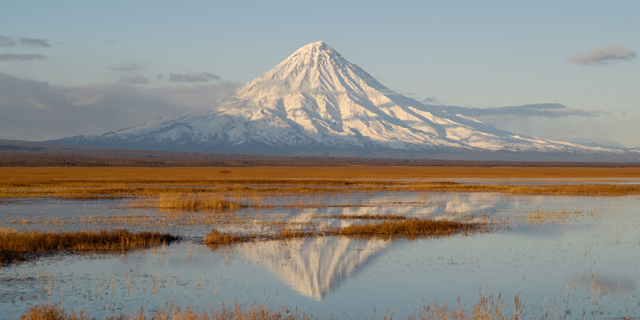
Hokkaido (Japanese: 北海道, Hepburn: Hokkaidō, pronounced [hok.kaꜜi.doː] , lit. 'Northern Sea Circuit'; Ainu: Ainu Mosir, lit. 'Land of the Ainu') is the second-largest island of Japan and comprises the largest and northernmost prefecture, making up its own region. The Tsugaru Strait separates Hokkaidō from Honshu; the two islands are connected by railway via the Seikan Tunnel.
The largest city on Hokkaido is its capital, Sapporo, which is also its only ordinance-designated city. Sakhalin lies about 43 kilometres (27 mi) to the north of Hokkaidō, and to the east and n...Read more
Hokkaido (Japanese: 北海道, Hepburn: Hokkaidō, pronounced [hok.kaꜜi.doː] , lit. 'Northern Sea Circuit'; Ainu: Ainu Mosir, lit. 'Land of the Ainu') is the second-largest island of Japan and comprises the largest and northernmost prefecture, making up its own region. The Tsugaru Strait separates Hokkaidō from Honshu; the two islands are connected by railway via the Seikan Tunnel.
The largest city on Hokkaido is its capital, Sapporo, which is also its only ordinance-designated city. Sakhalin lies about 43 kilometres (27 mi) to the north of Hokkaidō, and to the east and northeast are the Kuril Islands, which are administered by Russia, though the four most southerly are claimed by Japan. The position of the island on the northern end of the archipelago results in a colder climate, with the island seeing significant snowfall each winter. Despite the harsher climate, it serves as an agricultural breadbasket for many crops.
Hokkaido was formerly known as Ezo, Yezo, Yeso, or Yesso. Although Japanese settlers ruled the southern tip of the island since the 16th century, Hokkaido was primarily inhabited by the Ainu people. In 1869, following the Meiji Restoration, the entire island was annexed, colonized and renamed Hokkaido by Japan. Japanese settlers dispossessed the Ainu of their land and forced them to assimilate. In the 21st century, the Ainu are almost totally assimilated into Japanese society; as a result, the majority of Japanese people of Ainu descent have no knowledge of their heritage and culture.
More about Hokkaido
- Population 5383579
- Area 77984
- Stay safe
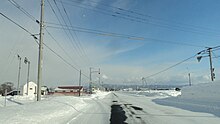 Road in rural Hokkaido. Note overhanging arrows marking road edge
Hokkaido has the worst fatality rate for traffic accidents in Japan. Hokkaido is one of Japan's most spread-out areas, well-known for its wide-open roads. Locals drive at least 20 km/h over the posted limits in many areas. It's not unusual to see cars traveling at over 100 km/h on regular highways (the posted limit is 60 km/h). Head-on collisions at these speeds, especially with minicars, are catastrophic.
Hokkaido has many country farm roads which are narrow, poorly marked, and arrow-straight. These often run parallel to highways and tend to be much less crowded. It's not unusual for locals to exceed 100 km/h on these roads. Missing a stop sign can be fatal, and signs may be hard to spot. Be careful of farm vehicles backing out of sheds with no warning, and especially careful of bicycles in the summer, as there are no shoulders.
...Read moreStay safeRead less
Road in rural Hokkaido. Note overhanging arrows marking road edgeHokkaido has the worst fatality rate for traffic accidents in Japan. Hokkaido is one of Japan's most spread-out areas, well-known for its wide-open roads. Locals drive at least 20 km/h over the posted limits in many areas. It's not unusual to see cars traveling at over 100 km/h on regular highways (the posted limit is 60 km/h). Head-on collisions at these speeds, especially with minicars, are catastrophic.
Hokkaido has many country farm roads which are narrow, poorly marked, and arrow-straight. These often run parallel to highways and tend to be much less crowded. It's not unusual for locals to exceed 100 km/h on these roads. Missing a stop sign can be fatal, and signs may be hard to spot. Be careful of farm vehicles backing out of sheds with no warning, and especially careful of bicycles in the summer, as there are no shoulders.
 Roadside grit bin in rural Hokkaido for use of locals in winter. These aren't always functional.
Winter driving in Hokkaido is not for the faint of heart. Very little sand or salt is used on the roads, and the heavy snow in many areas means that the roadways turn into packed snow, then solid ice. This also means that the road markings will be totally invisible. Look for overhanging center line (中央線 chūosen) signs above the roads at intersections. Highways have arrow signs pointing downward at the shoulders of the road, which will also be invisible. Winter tires are mandatory. Chains are recommended for mountain driving. Because speeds are lower, there are less fatalities, but there are more accidents in the winter. If you have never driven in the winter, do not attempt to learn here.
The Hokkaido brown bear (scientific name: エゾヒグマ ezohiguma, colloquially usually higuma), sacred to the Ainu, is Hokkaido's most famous predator. An estimated 10,000 still roam the island, but they're shy, reclusive creatures and you're highly unlikely to encounter one outside remote areas like Shiretoko National Park. Many Japanese hikers carry bear bells (熊鈴 kumasuzu). If camping in the wild, don't store any food in your tent.
The Hokkaido fox carries the echinococcus parasite, which can be fatal in humans. Because this parasite can be spread through water, do not drink any unboiled river or lake water in Hokkaido. Approaching or feeding foxes is also not recommended. (Feeding wildlife is also illegal.)