
Kalambo Falls
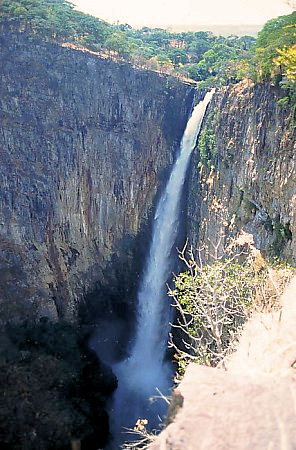
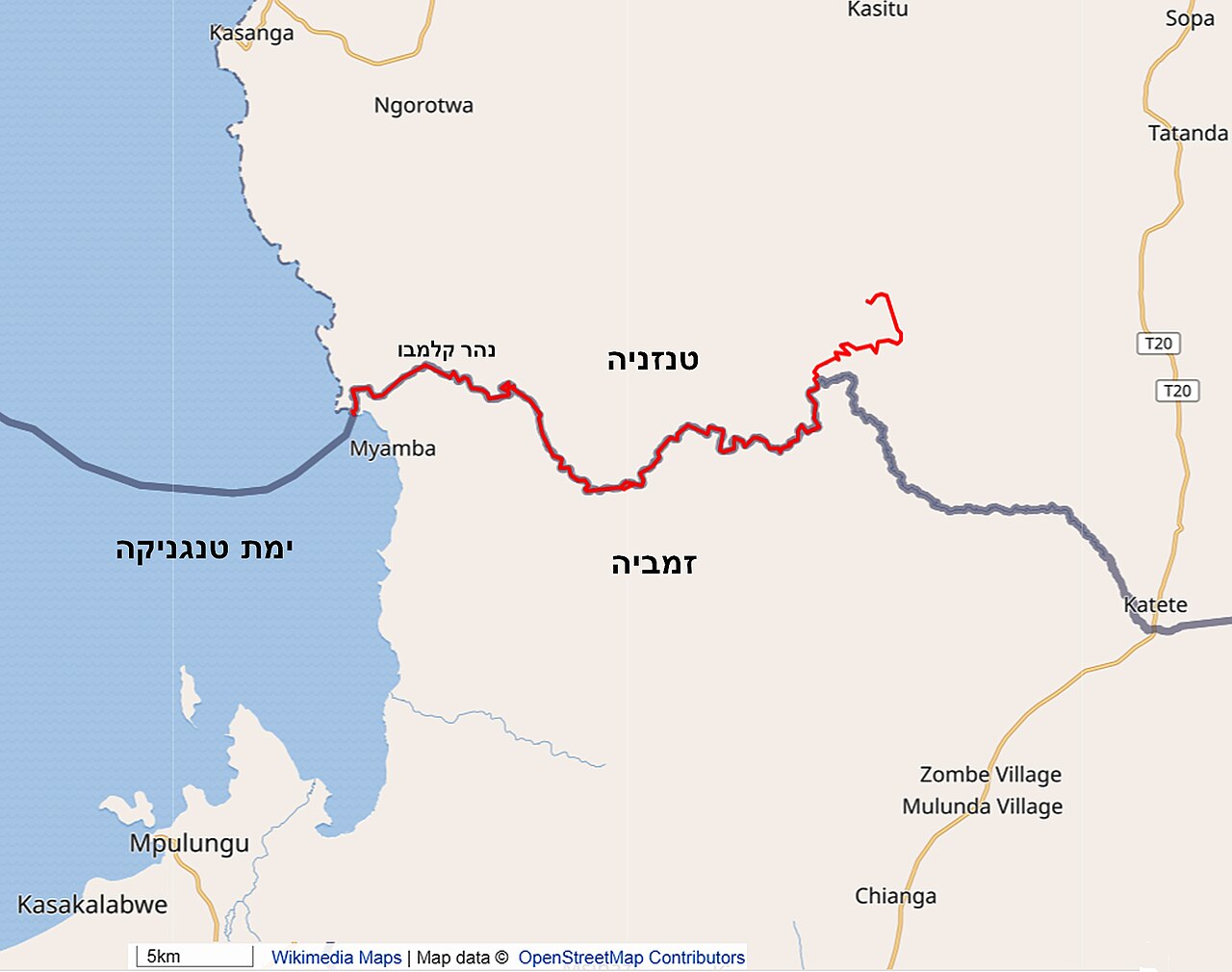
The Kalambo Falls on the Kalambo River is a 235-metre (772 ft) single-drop waterfall on the border of Zambia and Rukwa Region, Tanzania at the southeast end of Lake Tanganyika. The falls are some of the tallest uninterrupted falls in Africa (after South Africa's Tugela Falls, Ethiopia's Jin Bahir Falls and others). Downstream of the falls is the Kalambo Gorge, which has a width of about 1 km and a depth of up to 300 m, running for about 5 km before opening out into the Lake Tanganyika rift valley. The Kalambo waterfall is the tallest waterfall in both Tanzania and Zambia. The expedition which mapped the falls and the area around it was in 1928 and led by Enid Gordon-Gallien. Initially it was assumed that the height of falls exceeded 300 m, but measurements in the 1920s gave a more modest result, above 200 m. Later measurements, in 1956, gave a result of 221 m. After this several more measurements have been made, each with slightly different results. The width of the falls is ...Read more
The Kalambo Falls on the Kalambo River is a 235-metre (772 ft) single-drop waterfall on the border of Zambia and Rukwa Region, Tanzania at the southeast end of Lake Tanganyika. The falls are some of the tallest uninterrupted falls in Africa (after South Africa's Tugela Falls, Ethiopia's Jin Bahir Falls and others). Downstream of the falls is the Kalambo Gorge, which has a width of about 1 km and a depth of up to 300 m, running for about 5 km before opening out into the Lake Tanganyika rift valley. The Kalambo waterfall is the tallest waterfall in both Tanzania and Zambia. The expedition which mapped the falls and the area around it was in 1928 and led by Enid Gordon-Gallien. Initially it was assumed that the height of falls exceeded 300 m, but measurements in the 1920s gave a more modest result, above 200 m. Later measurements, in 1956, gave a result of 221 m. After this several more measurements have been made, each with slightly different results. The width of the falls is 3.6–18 m.
Kalambo Falls is also considered one of the most important archaeological sites in Africa, with occupation spanning over 447,000 years. In 2023, archaeologists announced the discovery of wooden structures estimated to be 476,000 years old at the falls, predating Homo sapiens. Two worked wooden beams display evidence that burning was used to create an interlocking wooden structure, possibly a platform by what would have then been a water source for the early hominid residents. This is the earliest known hominid structure.


![[node:title]](/sites/default/files/styles/640x320/public/default_images/default_0.JPG.webp?itok=aqV9zhFR)












Add new comment